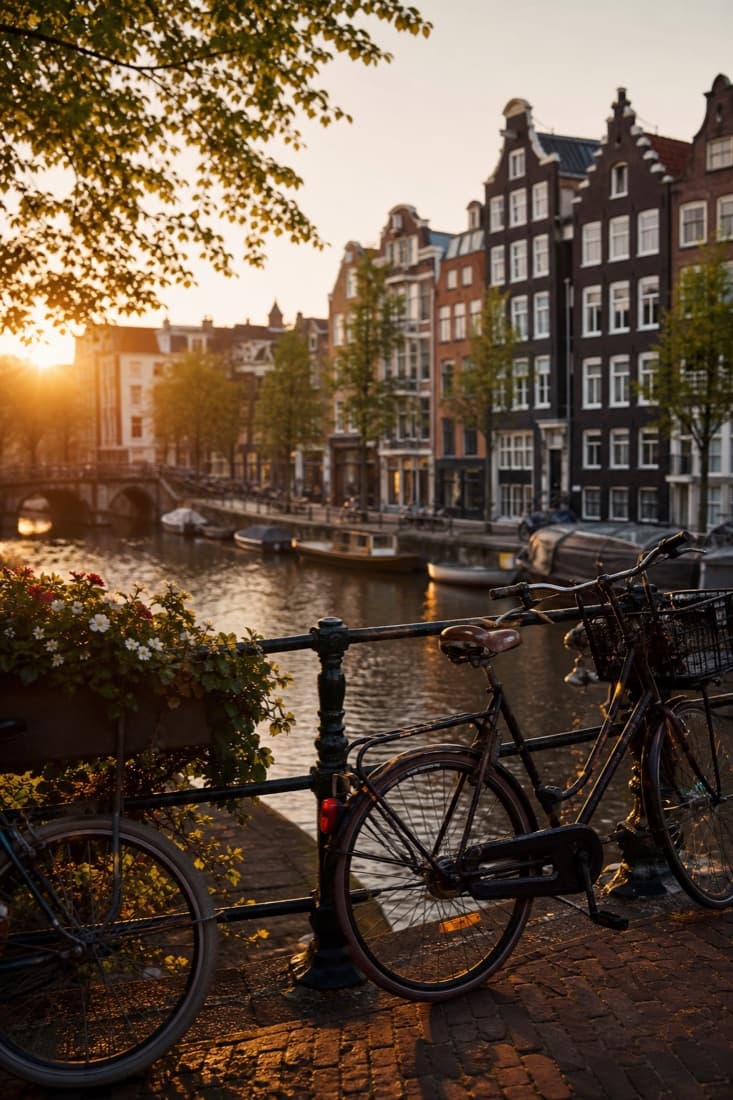
Amsterdam is walked in a half-circle. The old town fits between Central station and Dam square, and from there the main canals (Herengracht, Keizersgracht and Prinsengracht) trace rings you can follow, crossing bridges every few metres. Distances are short: from the Red Light District to the Anne Frank House is a fifteen-minute walk. The real obstacle is not the car but the bike, so it pays to check the red lane before crossing. A free walking tour is the logical way to understand why the city has this cobweb shape over the water.
Three walks give the visit its structure. The first is the historic centre and the Red Light District (De Wallen), with the alley by the Old Church, Nieuwmarkt and the Zeedijk; it is best seen with a guide because every doorway has its own rules. The second is the Golden Age axis: the Anne Frank House, the Westerkerk tower and the merchant houses that tell the story of 17th-century Amsterdam, the Nazi occupation and the 1970s. The third heads out of the centre towards Westerpark, the Haarlemmer neighbourhood and the Flower Mill (De Bloem), the greenest and quietest walk, ideal if you already know the old town.
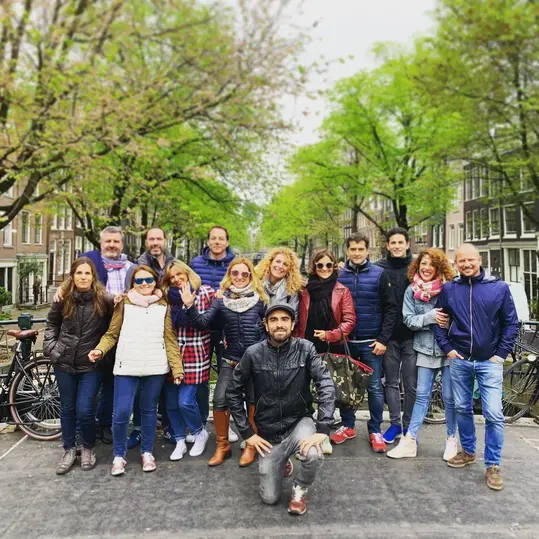
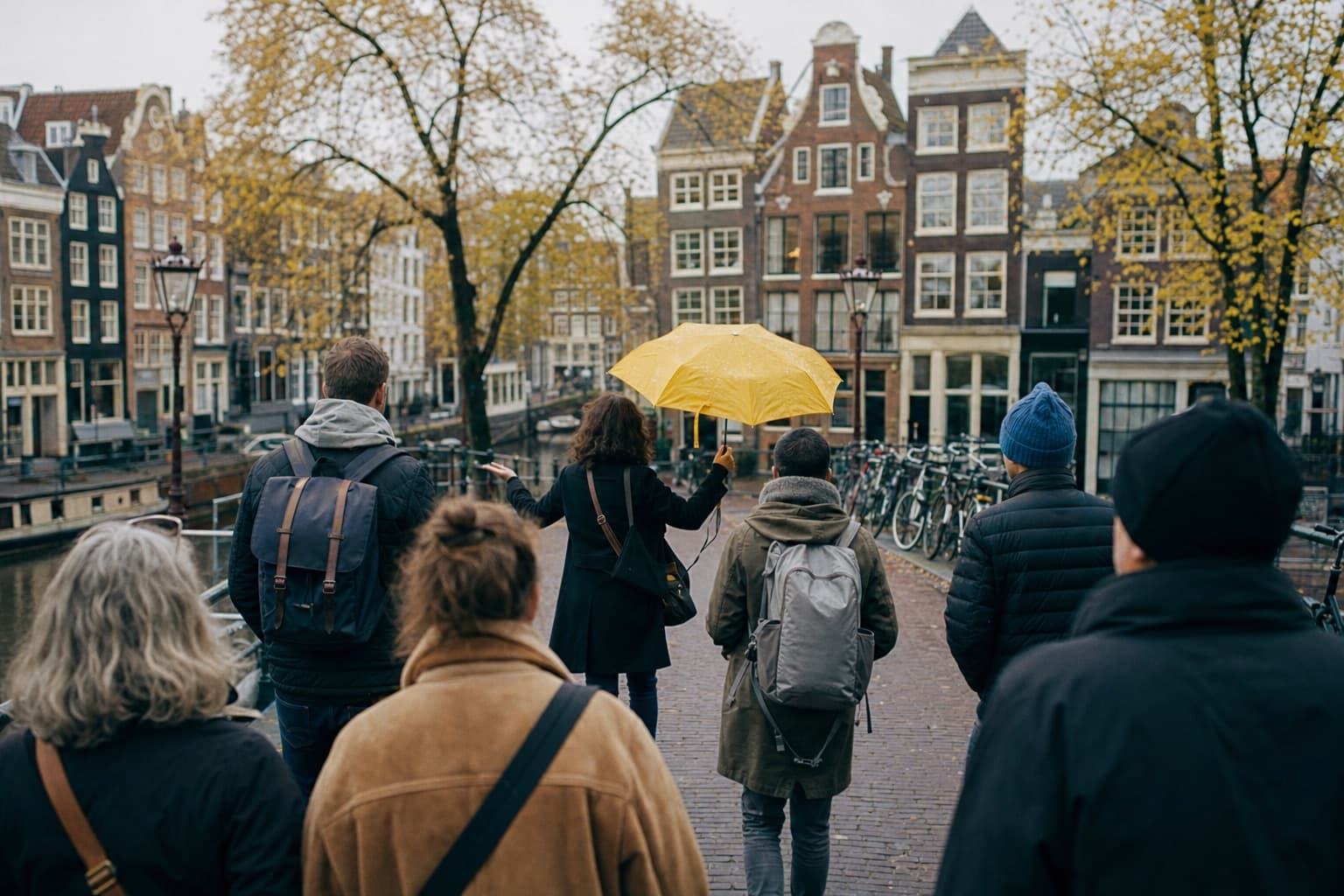
The usual starting point is Dam square, by the National Monument, or a few metres from Central station, with departures in the morning and mid-afternoon. Starting early has its reward: the canals are empty of groups and the Prinsengracht photos come out clean. It is worth booking a place even though signing up is free, because groups fill up in high season. At the end you hand the guide a voluntary contribution in thanks for the walk. Bring comfortable shoes and a raincoat: the weather changes fast and the cobbled ground is slippery.