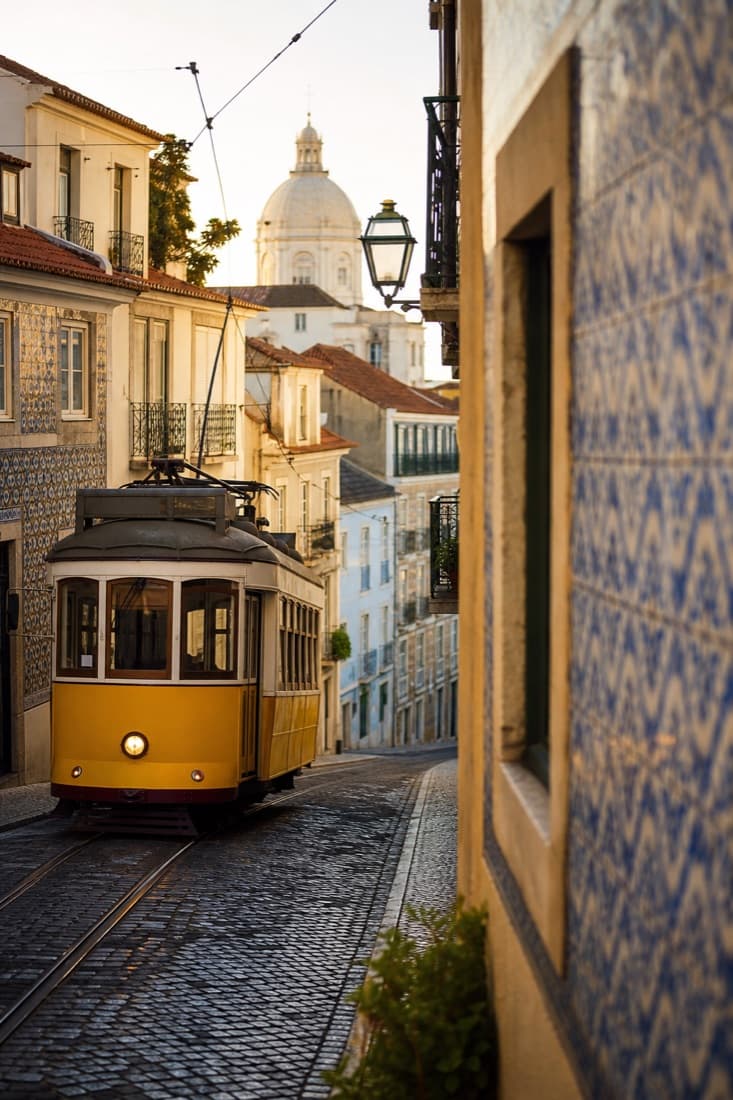
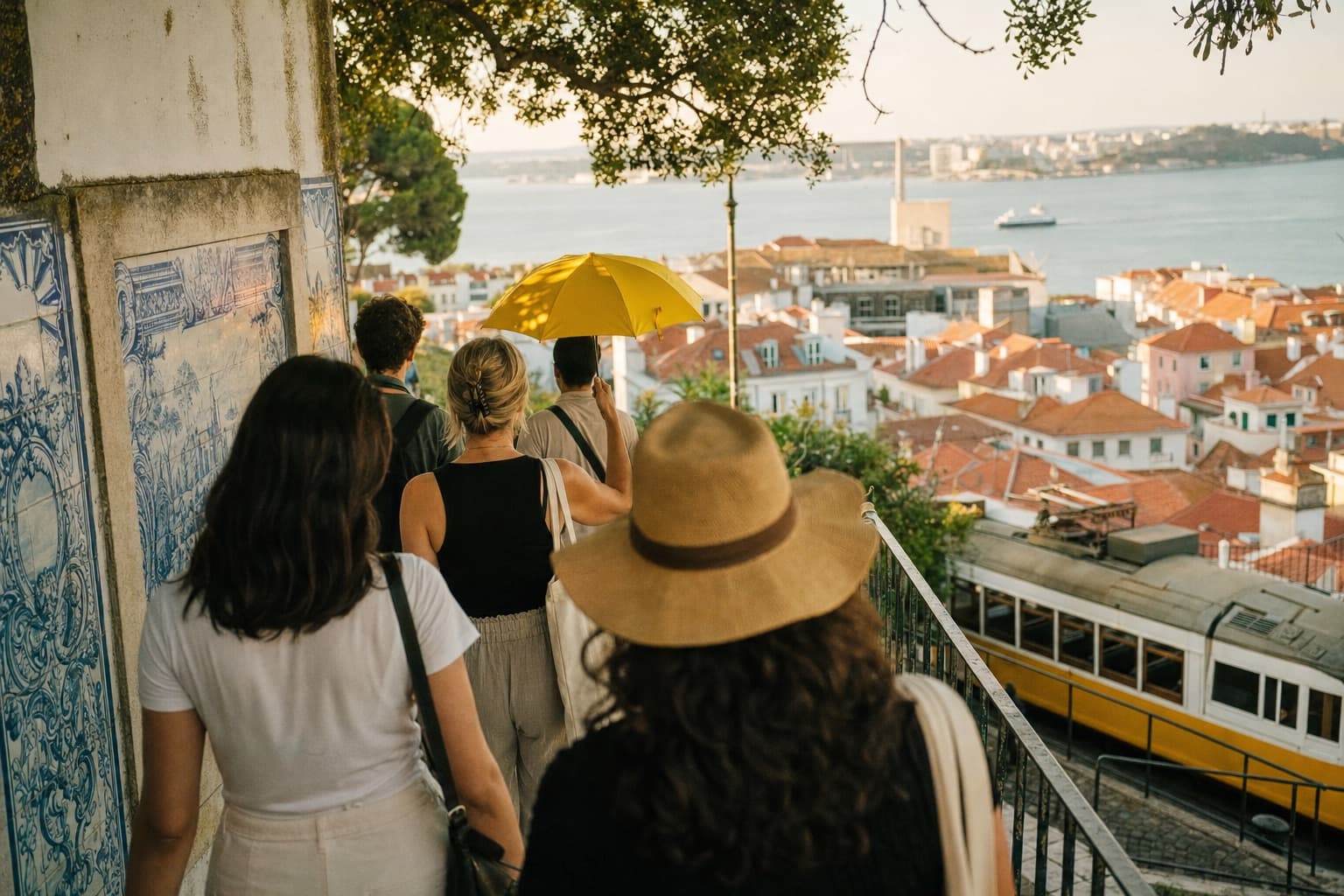
Lisbon is walked uphill and downhill. It is built on seven hills and the ground is calçada portuguesa, those black and white cobbles that turn slippery in the damp, so flat shoes are wise. Between one climb and the next come the miradouros, such as Santa Luzia or São Pedro de Alcântara, the natural pauses of any route. Tram 28 rattles through the old neighbourhoods, but what really shapes the visit is going on foot: almost all of the old town fits within a two-kilometre radius between the Tagus river and the hills of Alfama and the Bairro Alto.
Three areas take in almost all of the free tours. Alfama and Mouraria are the medieval heart, the neighbourhood that survived the 1755 earthquake: lanes with no map, São Jorge Castle up top, the Sé (the cathedral) and the fado houses where that song was born. The Chiado and Bairro Alto axis is the other pole, elegant by day in the bookshops and cafés of Chiado, and full of bars by night in the Bairro Alto. And then there is Belém, three kilometres downriver, where the caravels of the Age of Discovery set sail: home to the Jerónimos Monastery, the Belém Tower and the original 1837 pastéis de nata.
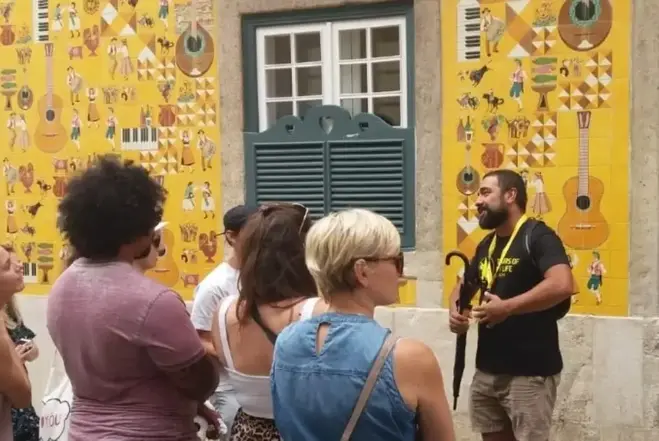
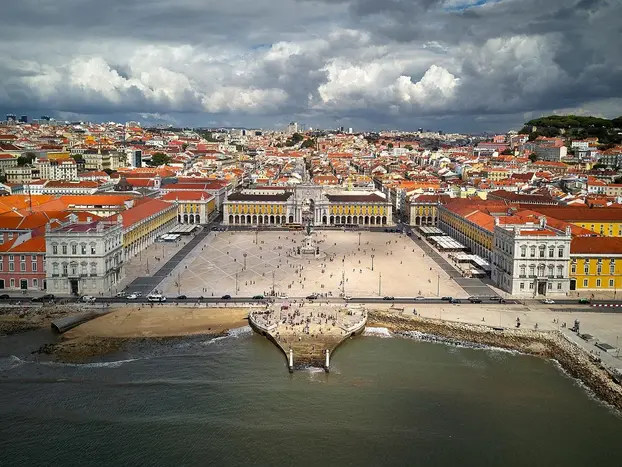
Almost all the routes leave from the flat centre, at the Praça do Comércio or the Rossio, and climb from there. Morning departures, around 10:00, dodge the heat and the crowds in Alfama; mid-afternoon ones catch better light for photos from the miradouros. Booking is free and at the end you leave a voluntary contribution for the guide according to what you made of the walk. Bring water, a hat in summer and some cash, because not all guides take the contribution by card.