In this article (8 sections)
Trip Tours is a walking-tour operator based in Madrid. In Amsterdam we do not run tours with our own guides: we work with trusted affiliated guides, and on our city page we bring together 16 free tours to choose from. Here we explain how the model works, with the same clarity we offer anyone booking with us in Spain.
What a free tour is and how it works
A free tour is a guided walk, in a group, that you book without paying upfront and where you contribute at the end according to how much you enjoyed it. The word free means there is no fixed price at booking, not that the guide works for nothing: at the end, each person leaves a voluntary contribution. It is the model that supports a professional guide who lives on those contributions.
The mechanics are simple. You choose the tour and time, book online saying how many people are coming, receive a confirmation with the exact meeting point and turn up a few minutes early. The guide recognises you from the booking, leads the walk, in Amsterdam around two to two and a half hours, and at the end says goodbye to each group. That is the moment for the contribution. Booking costs nothing and, if your plans change, you can cancel.

Do it with a guide
Free Tour through the Heart of Amsterdam
Welcome to our exceptional Free Tour of Amsterdam, where we will embark on a captivating journey through the rich tapestry of this...
How much to leave and how to pay: cash, card or phone
This is the question everyone asks. A free tour in Amsterdam is not entirely free, but it is not a matter of dropping a coin and walking off either: the usual benchmark is 15 to 20 euros per person for a two-hour walk you enjoyed. It is per person, not per group, and it is the same range used in Madrid, Barcelona or Lisbon, so there is nothing to convert: here you pay in euros.
What does change in Amsterdam is how you pay. It is a city where almost everything is paid by card, and guides have adapted: many accept phone payments, contactless cards or a QR code at the end of the walk. Even so, carrying some cash in small notes is still the most convenient option, because not every guide carries a card reader and you avoid queuing at the end. If you loved it, you can leave more; if it did not convince you, less. What matters is knowing that the contribution is how the guide gets paid.
Where free tours in Amsterdam start
Most free tours leave from the centre, and two spots come up again and again. The first is Dam Square, next to the National Monument, the white obelisk facing the Royal Palace: it is the city's kilometre zero and a ten-minute walk from Centraal Station. The second is the area around Centraal Station itself, where you arrive if you take the train from Schiphol airport. The exact spot, with a landmark to find the guide, always comes in the confirmation email.
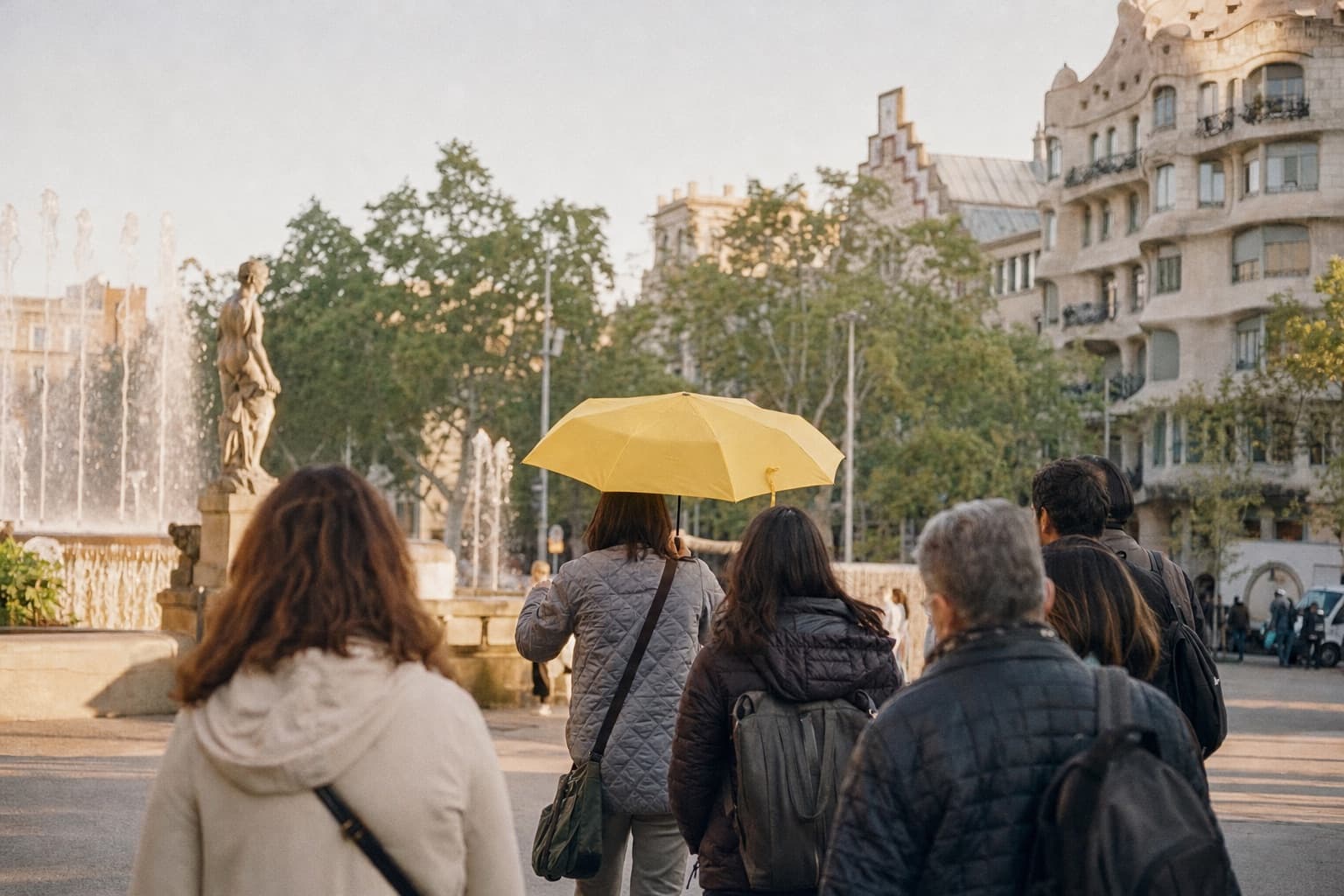
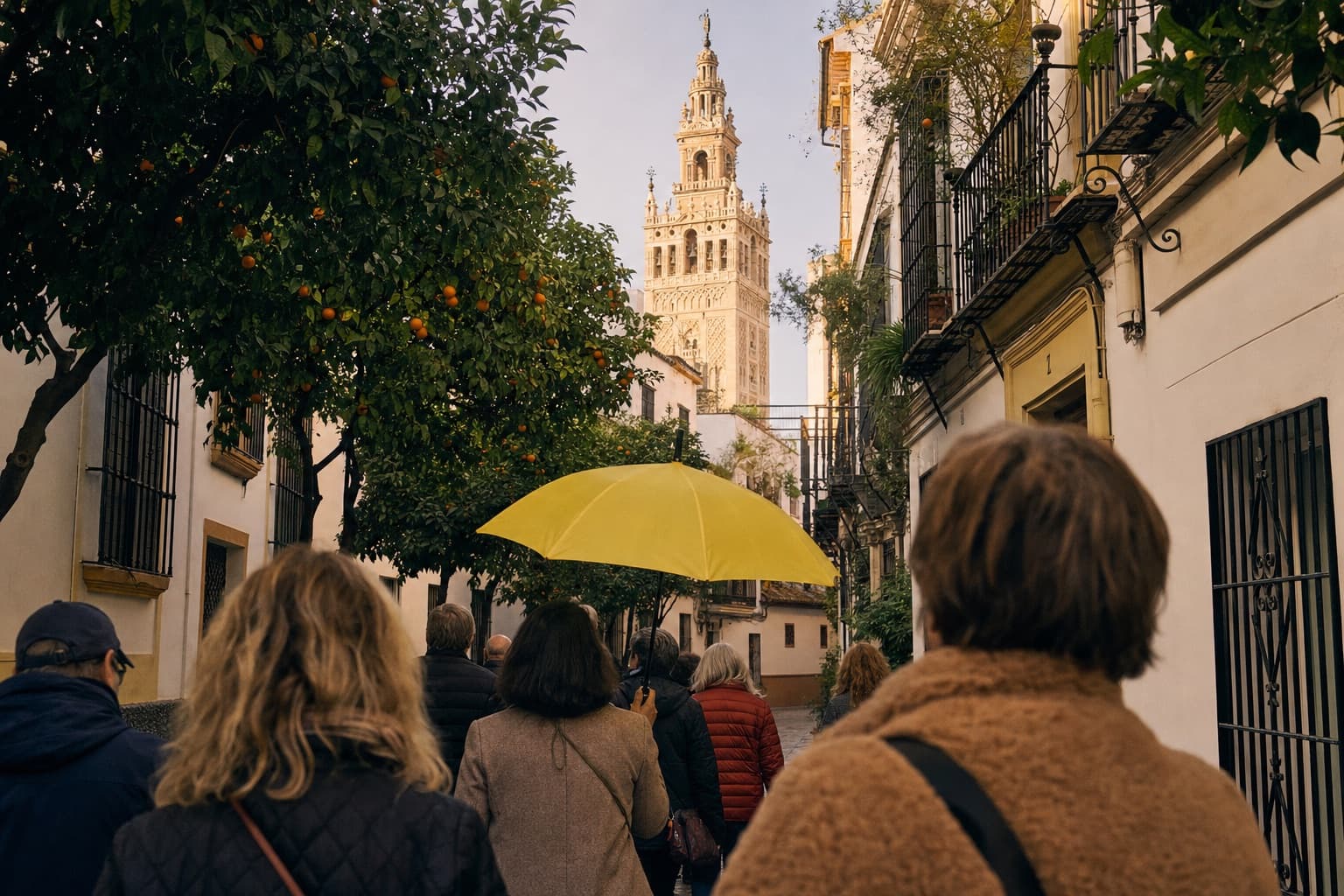
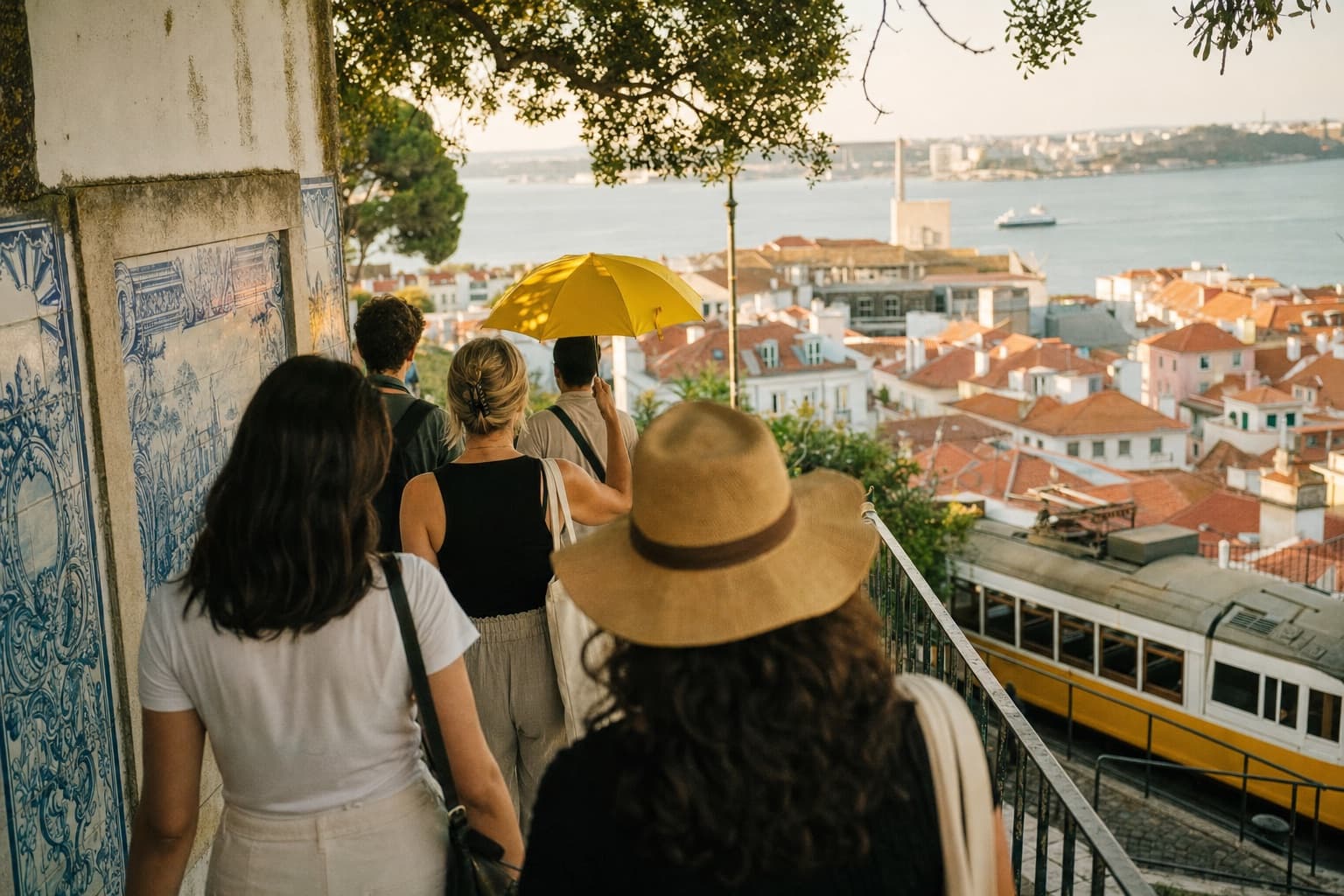
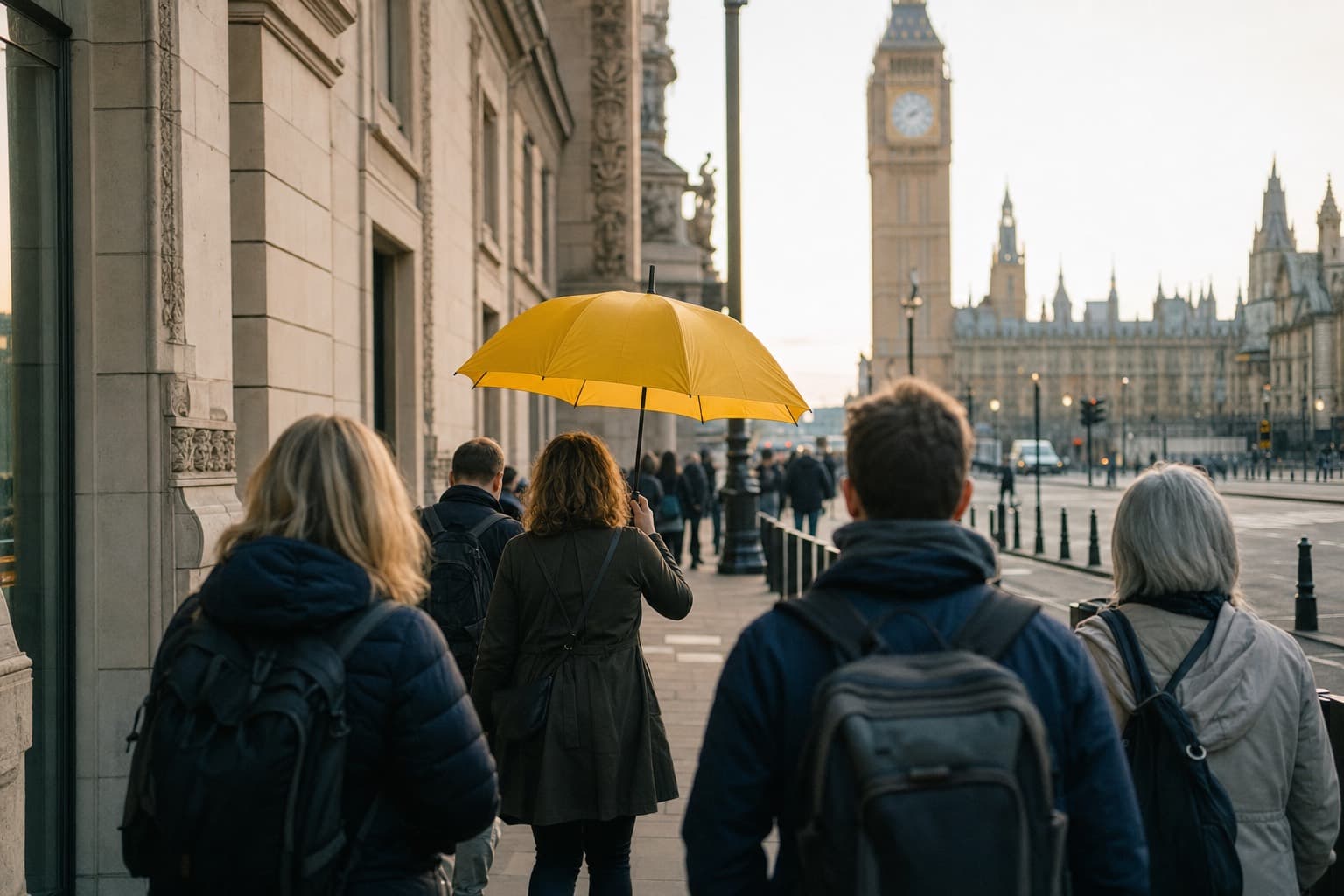
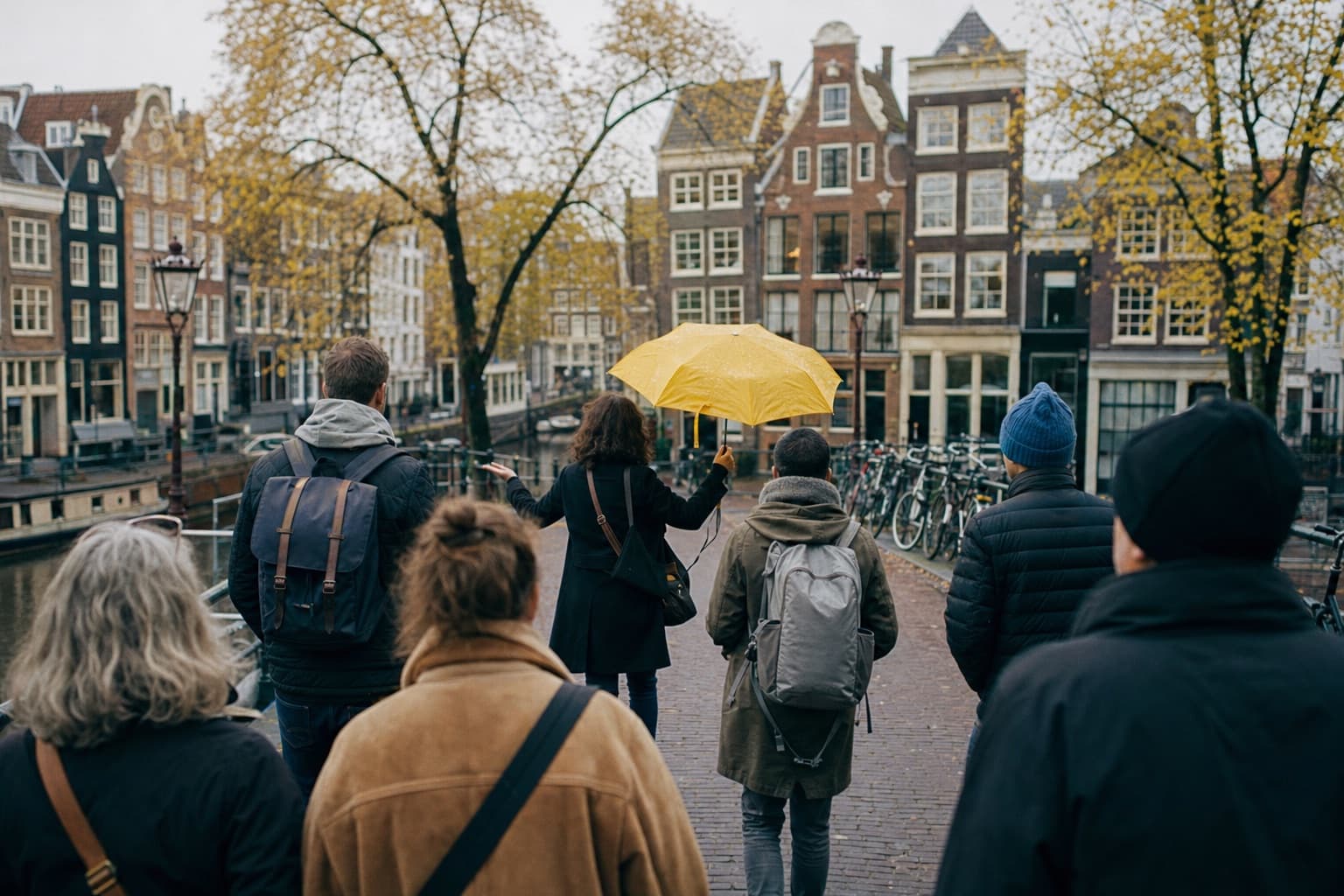
One tip: both areas are very busy, with trams, bicycles and people passing through. Arrive with ten or fifteen minutes to spare, find the guide by their sign or umbrella and do not stand in the bike lane while you wait. At the end, almost all the city-centre routes finish a short walk from where they began, in the Jordaan, near the Anne Frank House or along the Grachtengordel canals.
Book free, leave a contribution at the end

Which free tours there are and which to choose first
In Amsterdam you will find three main types. The classic is the historic centre: Dam Square, the Royal Palace, the Begijnhof, the Grachtengordel canals and the Jordaan district. It gives you the mental map of a city that, although compact, is confusing because of its ring of canals. If it is your first time, start here.
The second is the Red Light District, De Wallen, best done at night, when the district is in full swing and the guide explains its history, from the Oude Kerk to today's regulations. It is a walk that demands respect: photographing the windows is forbidden and the guide will remind you. The third is Anne Frank and the Second World War: the old Jewish quarter, the German occupation, the deportations and the Anne Frank House seen from outside. It is the one that gives the visit its historical context, and it is worth doing before you go into the museum, if you have a ticket.
Which languages are available and how to book
English is the default language in Amsterdam, with several departures a day all year round, so you will always have something to choose from. Spanish comes next, with daily departures in high season and several a week in winter. Italian and French have fewer departures, concentrated in spring and summer, so it is worth booking ahead and filtering by language.
Booking takes a minute and is free. You choose the tour, date and time, say how many people are coming and confirm the language. You receive an email with the time, the exact meeting point and how to recognise the guide. On the day you turn up ten or fifteen minutes early and show the booking on your phone. If in the end you cannot make it, cancel: the guide will have held your place and someone else could take it.
What is not included and how to get around afterwards
A free tour is a walk through the streets with a guide: it includes the route and the explanations, but not admission tickets. In Amsterdam this matters, because the three big museums work with online booking and time slots: the Rijksmuseum, the Van Gogh Museum and the Anne Frank House. The Anne Frank House, moreover, only sells tickets online and they sell out weeks in advance, so if you want to go in, sort it out before you travel. The free tour helps you decide which ones deserve your time and money.
For getting around afterwards, the good news is that Amsterdam is compact and flat: from the centre to Museumplein is half an hour on foot. The tram is convenient and you pay with your bank card when you get on and off. The bicycle is the city's trademark, but it is only a good idea if you are an experienced rider: cycle traffic is fast, with its own rules, and this is not the place to learn.
Tips and common mistakes
The first mistake is the bike lane: in Amsterdam it is reddish, level with the pavement and easy to cross without looking. Do not walk along it and do not stop on it for a photo, because the bikes do not brake. The second is the weather: it rains and blows often, and the wind makes umbrellas useless, so a rain jacket and closed shoes are better kit. In winter, besides, it gets dark early, around five in the afternoon, so morning or midday tours make better use of the light.
Other details: coffeeshops are not cafés but licensed cannabis shops; for a coffee look for a café or a koffiehuis. Keep an eye on your belongings on the trams, as in any capital. And in the Red Light District, no photos of the windows. With that, the free tour becomes the best first morning, or first night, in Amsterdam.
Frequently asked questions
- Are free tours in Amsterdam really free?
- Not entirely. There is no admission price and booking costs nothing, but at the end each person leaves a voluntary contribution for the guide. That contribution is how the guide gets paid, and they also pay a commission for your place before starting.
- How much do you leave as a contribution on a free tour in Amsterdam?
- The usual benchmark is 15 to 20 euros per person for a two to two-and-a-half-hour walk. It is per person, not per group, and you pay in euros. Many guides accept cards or phone payments, but cash in small notes is still the most convenient.
- Where do free tours in Amsterdam start?
- Most leave from Dam Square, next to the National Monument and facing the Royal Palace, or from the area around Centraal Station. The exact spot comes in the confirmation email. Arrive ten or fifteen minutes early and avoid waiting in the bike lane.
- Are free tours in Amsterdam in English?
- Yes, English is the default language, with several departures a day all year round covering the historic centre, the Red Light District and Anne Frank and the Second World War. Spanish also has a wide offer; Italian and French have fewer departures, mostly in spring and summer.
- Is the Red Light District free tour suitable for everyone?
- It is a historical, respectful walk through De Wallen aimed at adults; it works best at night, when the district is in full swing. Photographing the windows is not allowed and the guide will remind you. If you are travelling with young children, choose the historic centre tour.
- Does the free tour include the Anne Frank House?
- No. The Anne Frank and Second World War walk passes in front of the house and explains its history, but admission is not included. The museum only sells tickets online and they sell out weeks in advance, so buy yours before you travel.