In this article (8 sections)
What a free tour is and how it works
A free tour is a guided walk in a group that you book without paying up front, and where you contribute at the end based on how much you enjoyed the walk. The word free refers to there being no fixed price at the booking stage, not to the guide working for nothing: at the end, each person hands over a voluntary contribution, usually between 15 and 20 euros. It's the model that supports a professional guide who makes a living from those contributions.
The way it works is simple. You choose the tour and the time, book online saying how many of you there are, you get a confirmation and you show up at the meeting point a few minutes early. The guide recognises you from the booking, runs the walk, around two hours or two and a half in central Rome, and at the end you decide how much to give. There's nothing to pay on the website to book.

Do it with a guide
Bohemian Neighbourhood Tour: Trastevere
On this free tour we want to share with you one of the most beautiful corners of the Eternal City; the emblematic neighbourhood of Trastevere....
How much it costs: the contribution at the end
This is the question everyone asks. A free tour isn't entirely free, but it's not a case of simply handing over whatever you fancy either: in Rome the sensible benchmark is a contribution of 15 to 20 euros per person, and you give it at the end, not when you book. It's what lets the guide get paid for a good two hours of preparation and time on the street.
You pay per person, nearly always in cash and in euros, depending on how long the walk is and the size of the group. European tipping culture is more restrained than in the United States, where the contribution goes up to 20-30 dollars per person; in Rome it stays within that more moderate European range. It isn't required by law, but it's the guide's only pay, so it's worth carrying small notes.
Where free tours in Rome start
Unlike cities with a single nerve centre, in Rome free tours set off from several squares depending on the area they cover. The ones through the historic centre usually leave from Piazza di Spagna, at the foot of the Spanish Steps and next to the Fontana della Barcaccia (Spagna metro, line A). Others start at Piazza del Popolo, easy to spot by its obelisk, and head down Via del Corso towards the heart of the city (Flaminio metro, line A). And the ones focused on ancient Rome leave from Piazza del Colosseo (Colosseo metro, line B).
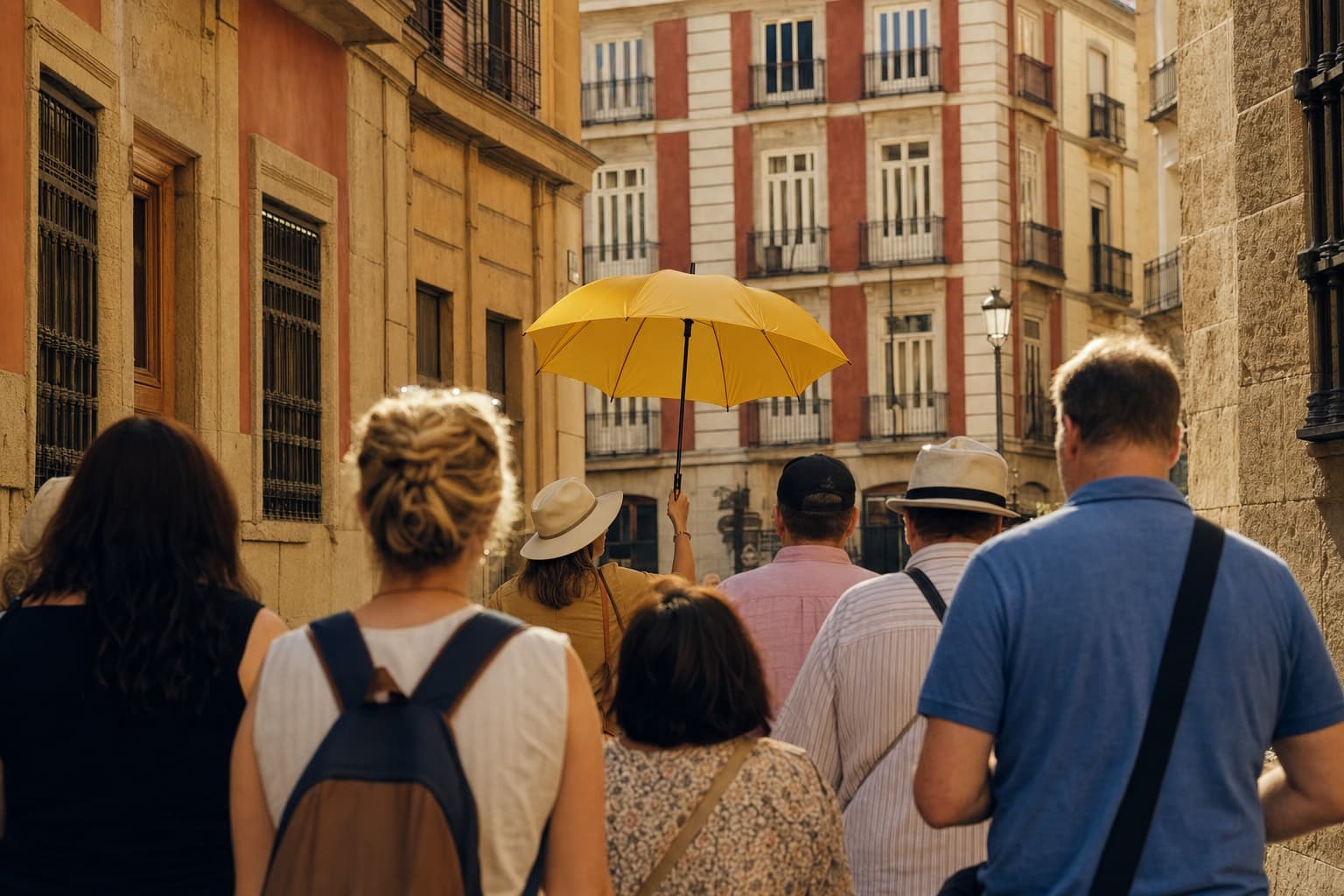
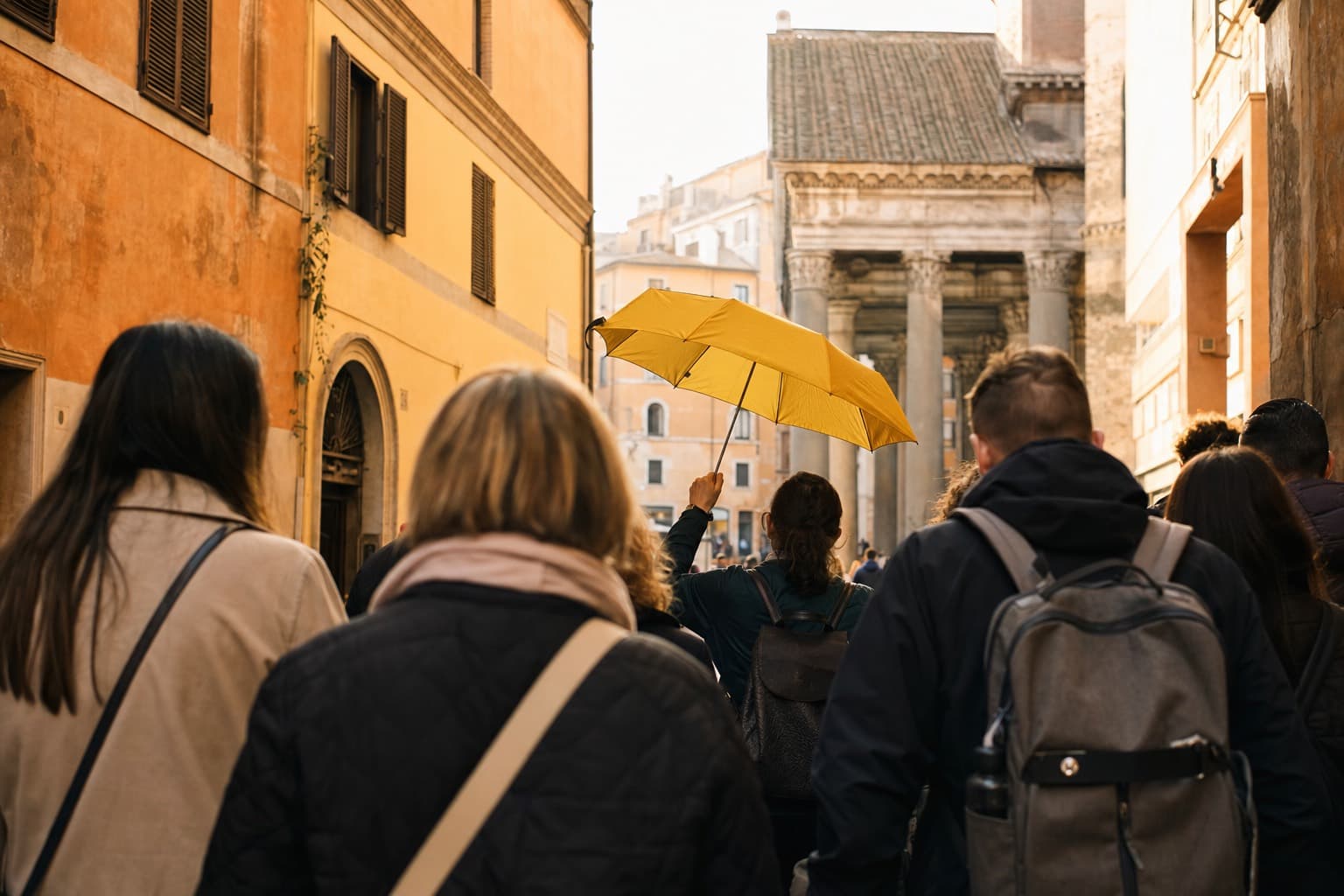
In every case, arrive with ten or fifteen minutes to spare. These are very busy squares, so find your guide by their sign or coloured umbrella, which is always noted in your confirmation. At the Colosseum, take care: don't confuse the free tour meeting point with the queues to get into the monument, which are a separate thing.
Book free, leave a contribution at the end

What's included and what isn't: the Colosseum and Vatican from outside
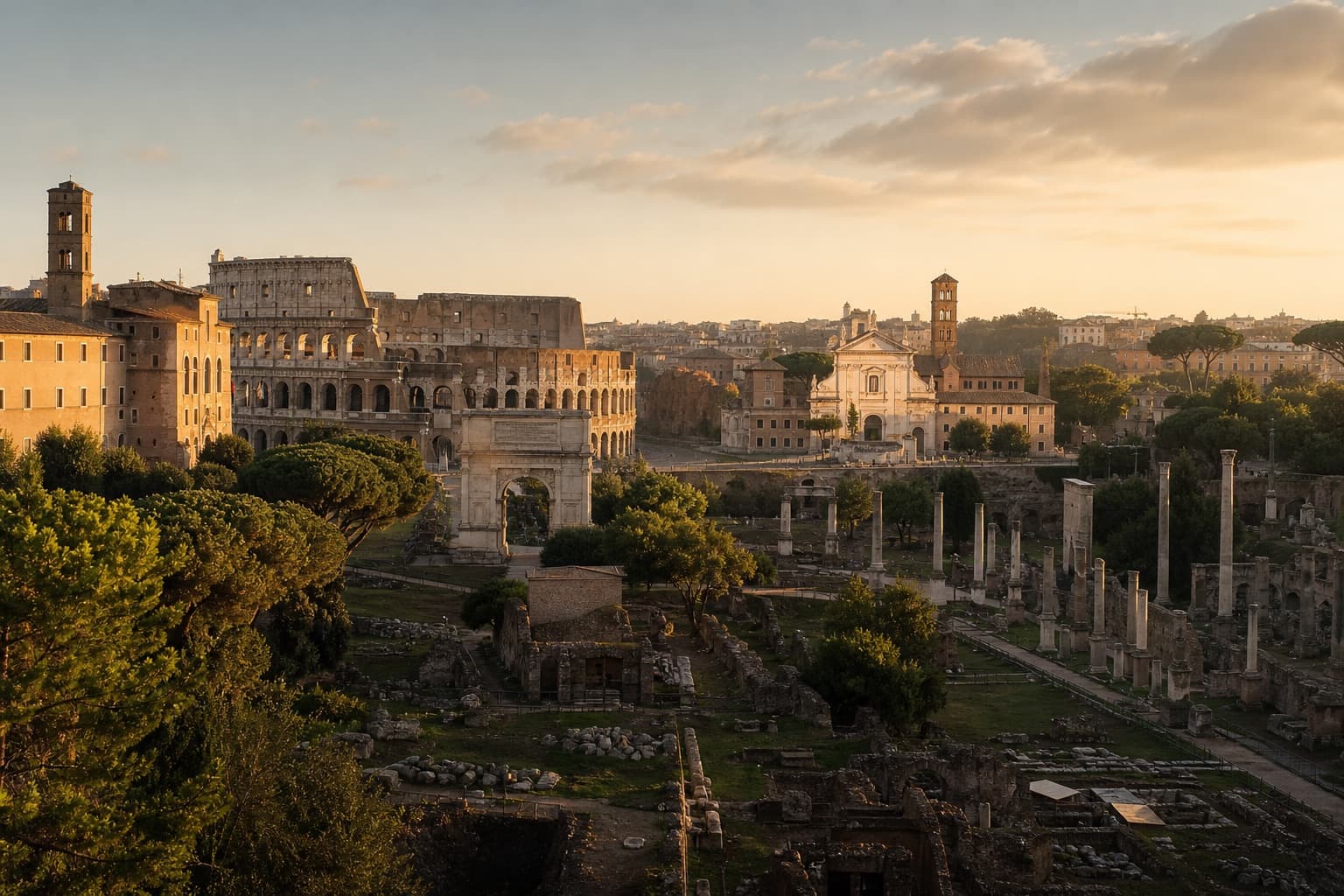
This is where most people get a surprise in Rome, so it's worth being clear about before you book. A free tour is a walk through the streets with a guide: it includes the route and the commentary, but it doesn't include entry tickets to monuments or any food and drink. In practice, this means the Colosseum, the Roman Forum and the Palatine are seen from outside, and that the Vatican free tour covers St Peter's Square and the surrounding area but doesn't go into the Vatican Museums or the basilica.
It's not a drawback, it's the model: the free tour gives you the context and the bearings to decide what you want to see inside at your own pace. If you want to go into the Colosseum or the Vatican Museums, you need a separate ticket, and there a guided visit with entry included and no queues pays off, which you can book on your own. The free tour and the ticket are two different, complementary things.
How to book and in which languages
Booking a free tour takes a minute and costs nothing. You choose the tour and the time, say how many people you are and confirm: you get an email with the time, the exact meeting point and how to recognise the guide. On the day of the tour you turn up ten or fifteen minutes early and show your booking; at the end you hand over your contribution. And if it turns out you can't make it, cancel from the email: it's free and it frees up your place.
One important detail in Rome is the language. English, Spanish and Italian have the most daily departures, so if you want a free tour in English you'll have plenty of slots to choose from; in high season there's also French, Portuguese and German. Not every time slot runs in every language, so confirm the exact language when you book so you're not caught out.
Which free tours there are in Rome and which to choose
Rome has free tours for almost everything, and if it's your first time there's an order that works. Start with the historic centre one, sometimes called essential Rome: in around two and a half hours it links the iconic squares and fountains, the Fontana di Trevi, the Pantheon, Piazza Navona and the Spanish Steps, and gives you the overall context to decide what to see afterwards at a more relaxed pace or with a ticket.
From there you can get more specific. The ancient Rome one circles the Colosseum, the Forum and the Palatine; the Vatican one covers St Peter's Square and its surroundings; the Trastevere and Jewish Ghetto one takes in two very charming neighbourhoods, lovely at dusk; and the mystery, crime and legend ones work well for the evenings. If you only have time for one, go with the historic centre; if you have more, combine them by area so you don't cover the same ground twice.
Tips to make the most of it and mistakes to avoid
A few small things make all the difference. Be on time: the guide sets off at the stated time and with the group, and can't wait for stragglers. In summer Rome's heat is no joke, so pick the early morning or dusk departures, carry water and avoid midday; in August, on top of that, the city celebrates Ferragosto and many Romans are away on holiday. And bring small notes for the contribution, because it's nearly always paid in cash.
Two common mistakes. The first, assuming the free tour goes into the Colosseum or the Vatican: it doesn't, they're seen from outside, and for the inside you need a separate ticket. The second, leaving your booking until the same day: after the 2025 Jubilee footfall is still very high and places fill up, especially on long weekends and public holidays, so book ahead.
Frequently asked questions
- Are Rome's free tours really free?
- Not entirely, and it's worth knowing before you book. Booking is free and you pay nothing up front, but at the end each person hands over a voluntary contribution, usually 15 to 20 euros. That money is what the guide earns; it's neither wholly free nor a token tip.
- How much do you contribute on a free tour in Rome?
- The sensible benchmark is 15 to 20 euros per person, which you give at the end of the walk, nearly always in cash and depending on the length and the size of the group. It's neither a fixed price nor a legal obligation, but it's the guide's only pay, so it's worth carrying small notes.
- Where do free tours in Rome start?
- It depends on the area. The historic centre ones usually leave from Piazza di Spagna; others from Piazza del Popolo; and the ancient Rome ones from Piazza del Colosseo. Check your confirmation email, which gives the exact spot and how to recognise the guide, and arrive ten or fifteen minutes early.
- Are there free tours in English in Rome?
- Yes, and English is among the languages with the most departures. English, Spanish and Italian have the most daily departures, and in high season there's also French, Portuguese and German. Confirm the exact language when you book, because the times vary by language and time of year.
- Do you need to book the free tour in advance?
- Yes. Places are limited and booking online is free and cancels at no cost. In high season, long weekends and public holidays fill up, and after the 2025 Jubilee footfall is still very high, so it's best not to leave it until the same day.
- Does the free tour go into the Colosseum or the Vatican?
- No. The Colosseum, the Forum and the Palatine are seen from outside, and the Vatican free tour covers St Peter's Square but doesn't go into the museums or the basilica. The free tour doesn't include tickets; for the inside you need a visit with entry included, which is booked separately.