Civil War Free Tour
- 2 h 30 min
- Walking tour
- Max. 25
- Small group
- Free cancellation
- Until it starts
- No upfront payment
- You give at the end
About this free tour
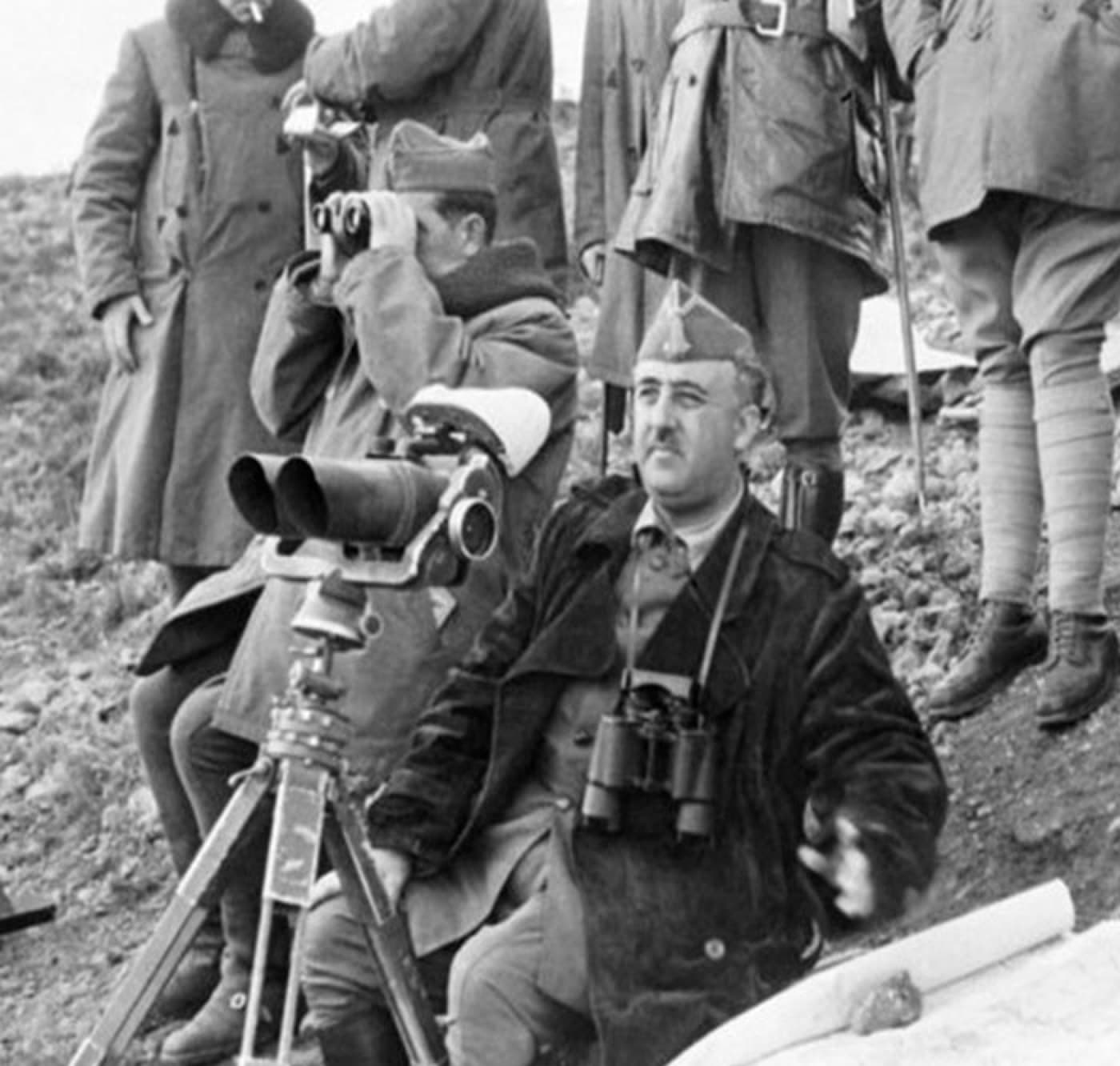
Madrid was one of the first European capitals to suffer massive aerial bombing of its civilian population, and for almost three years it lived with the front line literally inside the city. On this free tour you walk through the real settings of the Civil War (1936-1939): the place where it all began in July 1936, the trenches of the Parque del Oeste, the deadlocked front at the University City and the streets that propaganda called "the Madrid that shall not pass". It is not a walk of scattered anecdotes, it is about understanding what it is like to live in a city split in two.
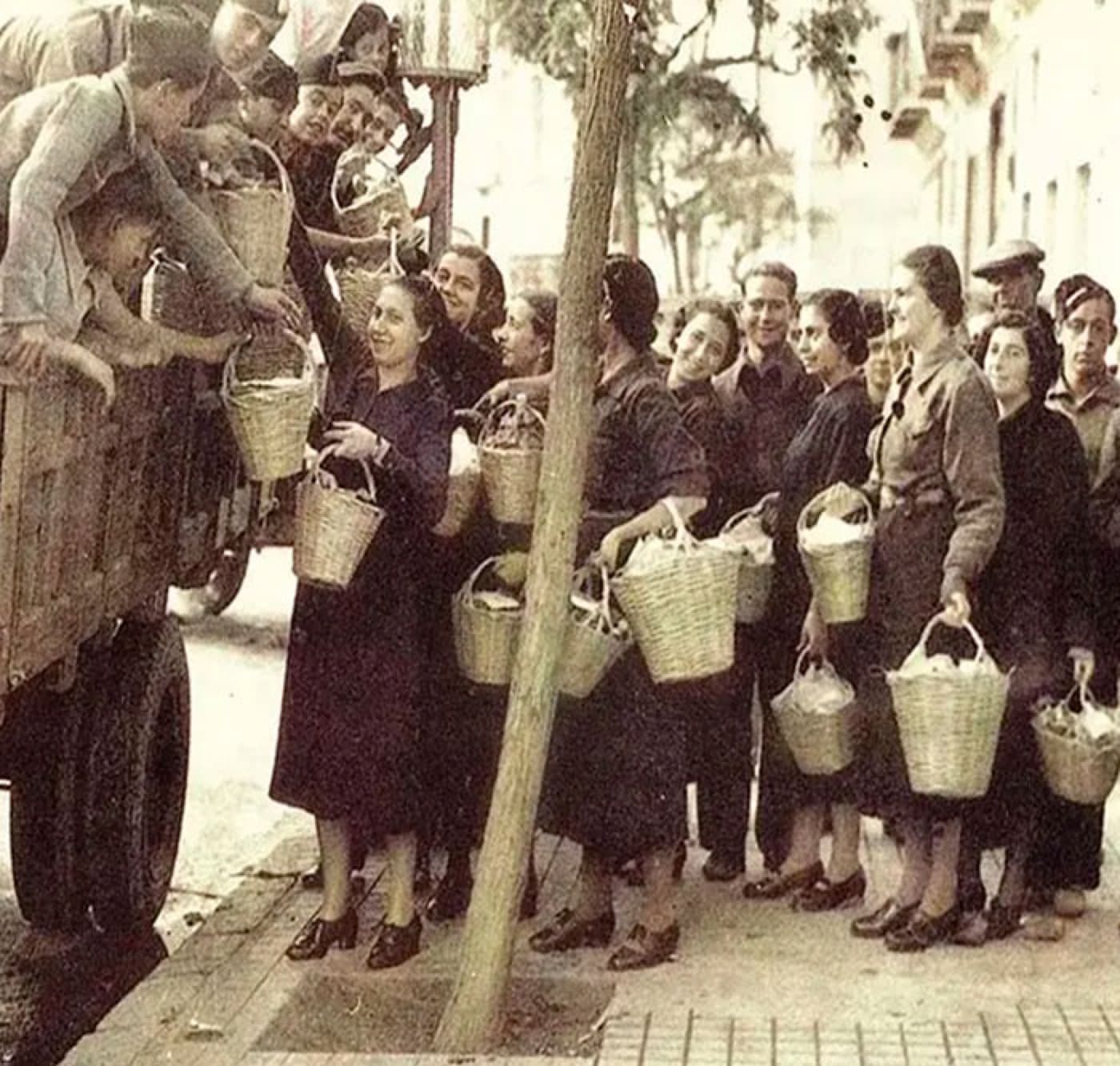
The tour combines the great military milestones with everyday life: what people ate when everything was scarce, how the sirens sounded, where residents took shelter when the shells fell. You will see why the Gran Vía was nicknamed "the Avenue of the Shells", how the Telefónica building became the most fought-over skyscraper in Europe and what role the International Brigades played as they marched along these very pavements in November 1936. The tone is rigorous and respectful: real people died and suffered here, and that is how it is told.
This tour is part of the European Trip Tours network, designed for those who travel around several capitals of the continent and want to understand the 20th century where it happened. If you come from Berlin, Prague, Guernica or the memory of the Second World War, Madrid is a key piece: it was the dress rehearsal for the aviation that would later devastate Europe. It fits perfectly into an itinerary of historical memory that crosses borders, and also into a few loose days in the city.
It is designed for those spending 2 or 3 days in Madrid who do not want to stick only to the Royal Palace and the Prado. You can do this tour one morning or afternoon and devote the rest to the classics, because we take you through neighbourhoods (Príncipe Pío, Argüelles, Moncloa) that many visitors never set foot in, but that were the front line. You leave knowing how to look at Madrid in a different way: you will recognise the impacts on the facades that would have gone unnoticed before.
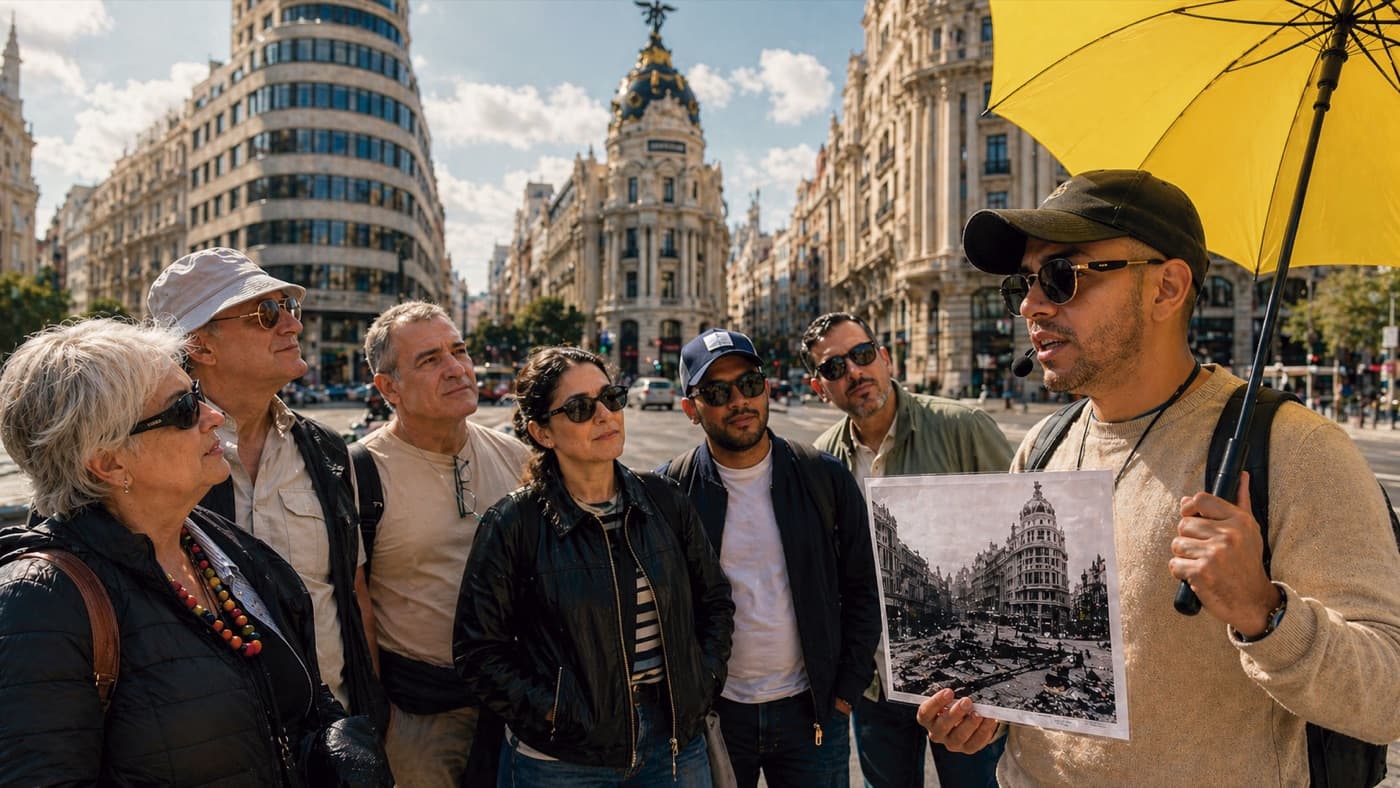
The guide brings period photographs so you can compare then and now at the exact same spot. Small groups, a relaxed pace, plenty of stops and all the room for your questions. You do not need any prior knowledge of Spanish history: we start with the context and take you by the hand through the three years of the siege.
Highlights
- The place where the war broke out in Madrid: the storming of the Montaña Barracks in July 1936, today next to the Temple of Debod
- The trenches of the Parque del Oeste and the front at the University City, where the firing line froze in place inside the city
- The Gran Vía nicknamed the Avenue of the Shells and the Telefónica building as an artillery observation post
- The trail of the International Brigades that marched through Madrid in November 1936
- The air-raid shelters and everyday life under the bombs: queues, rationing and sirens
- Real traces of the conflict: shrapnel marks still visible on facades in the centre
What you'll see
The Temple of Debod and the former Montaña Barracks
The point where the war began in Madrid. The Montaña Barracks stood here, stormed on 20 July 1936. Today the esplanade remains, along with the views towards the mountain front.
Parque del Oeste and the trenches
A zone of direct combat during the siege. You can still make out the ground where trenches were dug and where the Casa de Campo, opposite, fell into the hands of the rebel army.
Puente de los Franceses and the University City
The front that inspired the song "nobody gets past them". The newly built faculties became a battlefield building by building, with the line deadlocked for almost three years.
The Telefónica building on the Gran Vía
Madrid's first skyscraper, used as an observation post and a constant target for Franco's artillery. From its height, fire on the city was corrected.
The Argüelles and Moncloa neighbourhoods
The urban front line, among the hardest hit by the shells. Entire blocks were destroyed and rebuilt afterwards, which explains why the landscape changes so abruptly.
Shrapnel marks and places of memory
Impacts still in plain sight on some facades and plaques that remember the victims of the bombing of a European capital against its own people.
What's included
- Guide who specialises in the contemporary history of Madrid
- Walking tour of approximately 150 minutes
- Period photographs to compare the same spots then and now
- Small groups with time for questions
Not included
- Transport or transfers
- Admission to museums, buildings or any interior
- Food and drink
- The voluntary contribution to the guide at the end (around 15 to 20 euros per person)
Meeting point
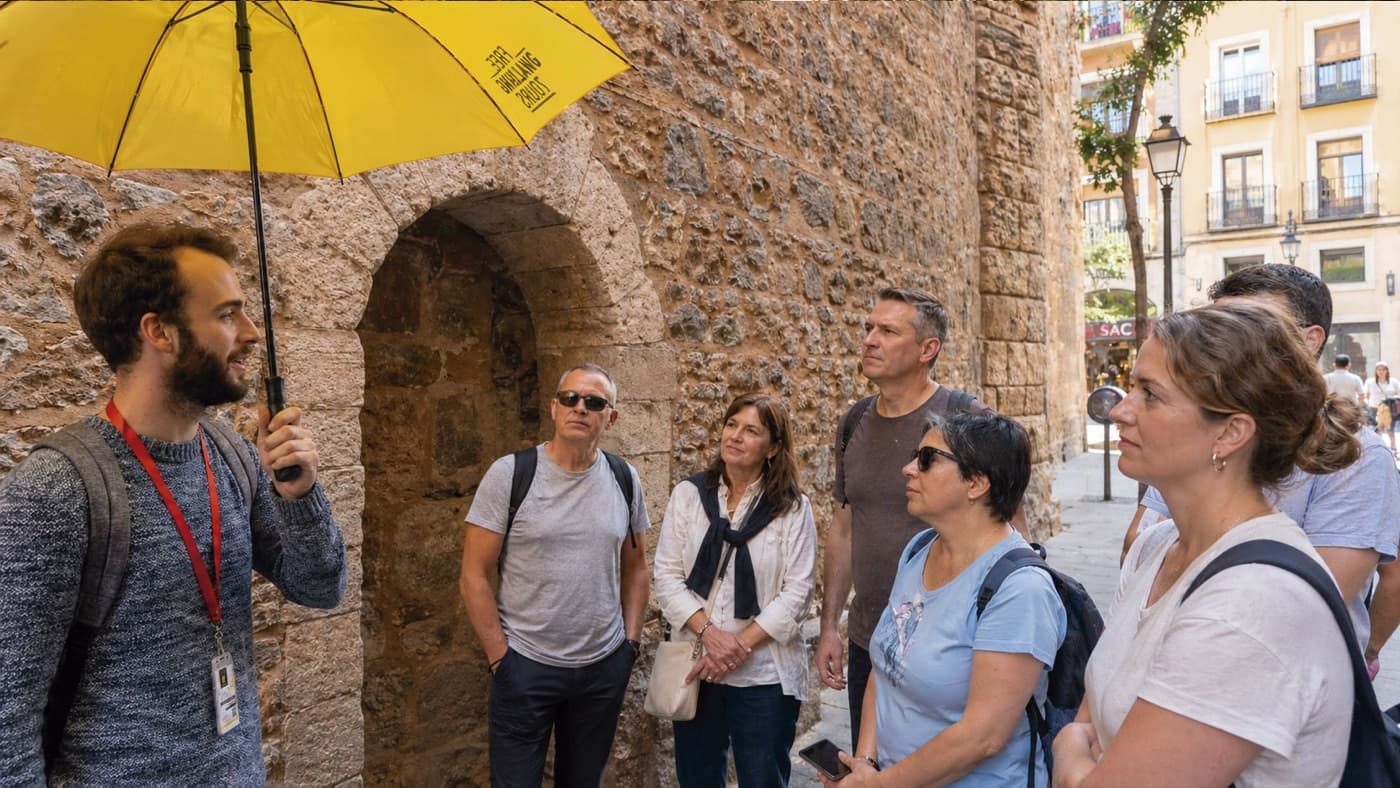
Look for the yellow umbrella
Explanada del Templo de Debod, junto al mirador (Parque de la Montaña, Príncipe Pío)
We meet on the esplanade of the Temple of Debod, at the viewpoint looking towards the Casa de Campo and the mountains. The guide carries a visible Trip Tours sign. The nearest metro stop is Plaza de España (lines 3, 10 and 2) or Ventura Rodríguez (line 3); from there it is about a 5-minute walk uphill. Arrive 10 minutes early to find the group and start on time.
Reviews
3,561 reviews on Google
Trip Tours' real average rating on Google.
“Filipino traveler here. I was really amazed by the guide, Stuart. He was incredibly knowledgeable and seemed to know everything about the history of Madrid. If you are someone who loves history like me, then this tour is definitely worth it promise! He was very passionate about what he does, and you can really feel it throughout the tour. He also recommended a flamenco show to me, and it turned out to be one of the best experiences of my trip. I definitely did not regret going. 5 star for stuart!”
Google · 4 months ago
“Stu was really good! He was interesting and interactive. Explained lots about Madrid, its history, its buildings. The pace was excellent and he gave us lots of tips to explore the city some more. Highly recommended! Thanks Stu!”
Google · 10 months ago
“From the moment we set off, it was clear we were in the hands of someone truly special. Stu’s knowledge of Madrid is extraordinary — he brought the city to life in a way no guidebook ever could, weaving together history, culture, food, and hidden gems with effortless enthusiasm. Every street corner became a story, every plaza a stage. What sets Stu apart is his genuine passion for sharing Madrid with visitors. He anticipated our every need, set a perfect pace, and made everyone in the group feel seen and included. His energy was infectious, his humor spot-on, and his insider recommendations (the tapas spot alone was worth the whole trip!) were absolute gold. If you’re visiting Madrid, don’t walk it without Stu. He doesn’t just show you the city — he makes you fall in love with it. One of the best experiences of our travels, full stop. Thank you, Stu! 🙌”
Google · 4 months ago
“We joined the Old Town tour, and our guide Carlota was amazing! She shared so much informative content and supported everything with visuals. The tour was well-paced with short breaks to rest, and we even got to try a delicious madroño shot. Be ready for final quiz at the end 😁 Thank you, Carlota! 🙏🏻”
Google · 3 months ago
FAQ
- How does payment for the free tour work?
- Booking has no cost in advance. At the end of the tour, each person gives the guide a voluntary contribution based on how they found the experience, around 15 to 20 euros per person. It is how the guide's work is sustained.
- Is the tour suitable if I know nothing about the Spanish Civil War?
- Yes. We start with the context so anyone can follow it, even if you come from another country and only know the Second World War. In fact that is a good starting point, because the bombing of Madrid was a foretaste of what Europe would later go through.
- Is the tour very physically demanding?
- It is a walk of about 150 minutes through neighbourhoods in the northwest of Madrid, with the odd uphill stretch in the Parque del Oeste. The pace is relaxed and with plenty of stops, but comfortable shoes and water are advisable, especially in summer.
- Do we go into any building or museum?
- No. It is a walking tour outdoors: esplanades, streets, parks and facades. No indoor admissions are included, which leaves the rest of your day free to visit museums such as the Prado or the Reina Sofía on your own.
- Does it fit well if I'm only a few days in Madrid or travelling around several capitals?
- Perfectly. It takes up a morning or an afternoon and leads you through areas most visitors never set foot in, so it complements the classics very well. As part of the European Trip Tours network, it is a natural piece in a 20th-century memory itinerary across several cities of the continent.
Keep exploring
More tours in Madrid
 Free
FreeFree tour
Habsburg Madrid Free Tour
 Free
FreeFree tour
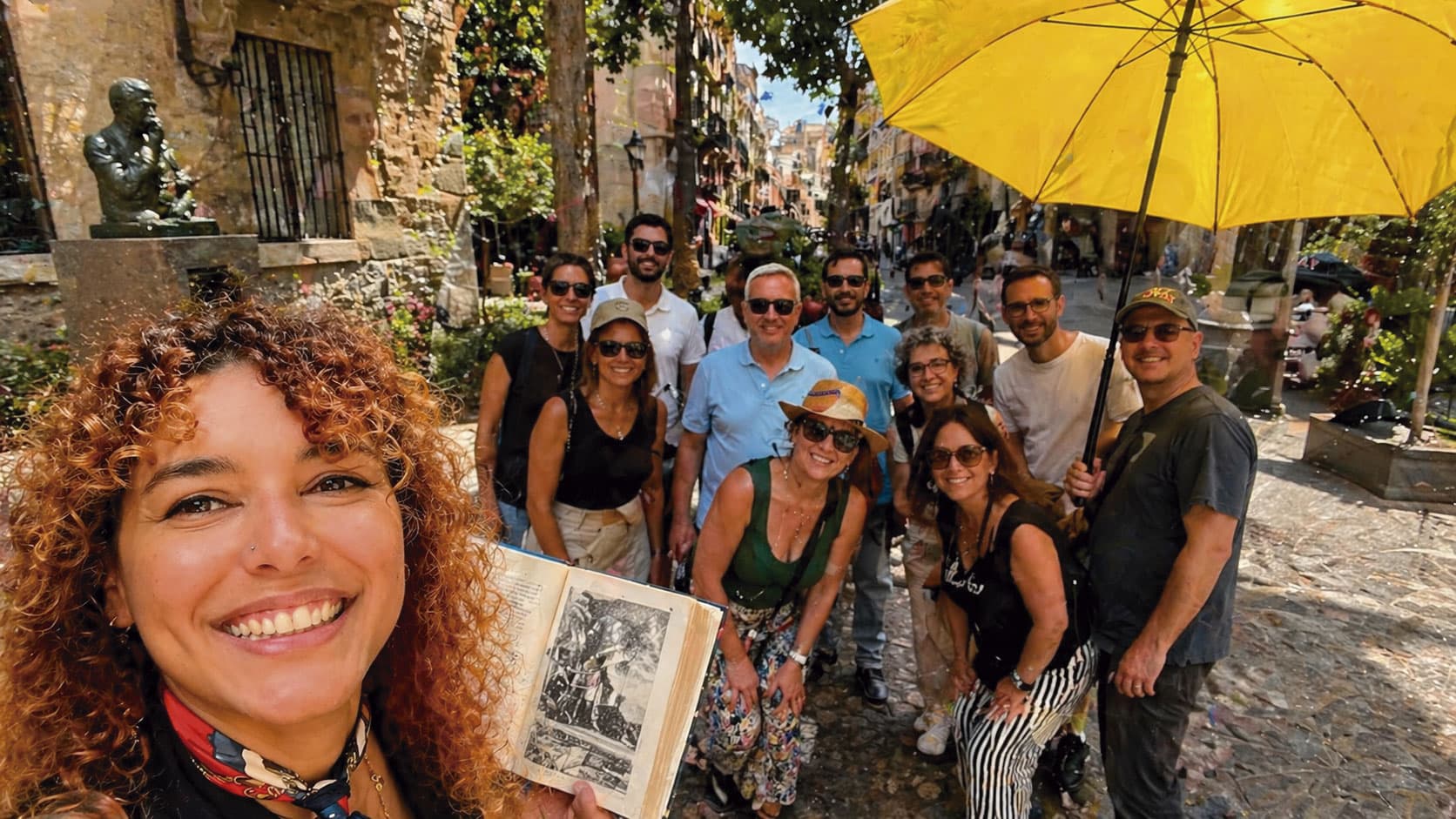
Literary Quarter Free Tour
 Free
FreeFree tour
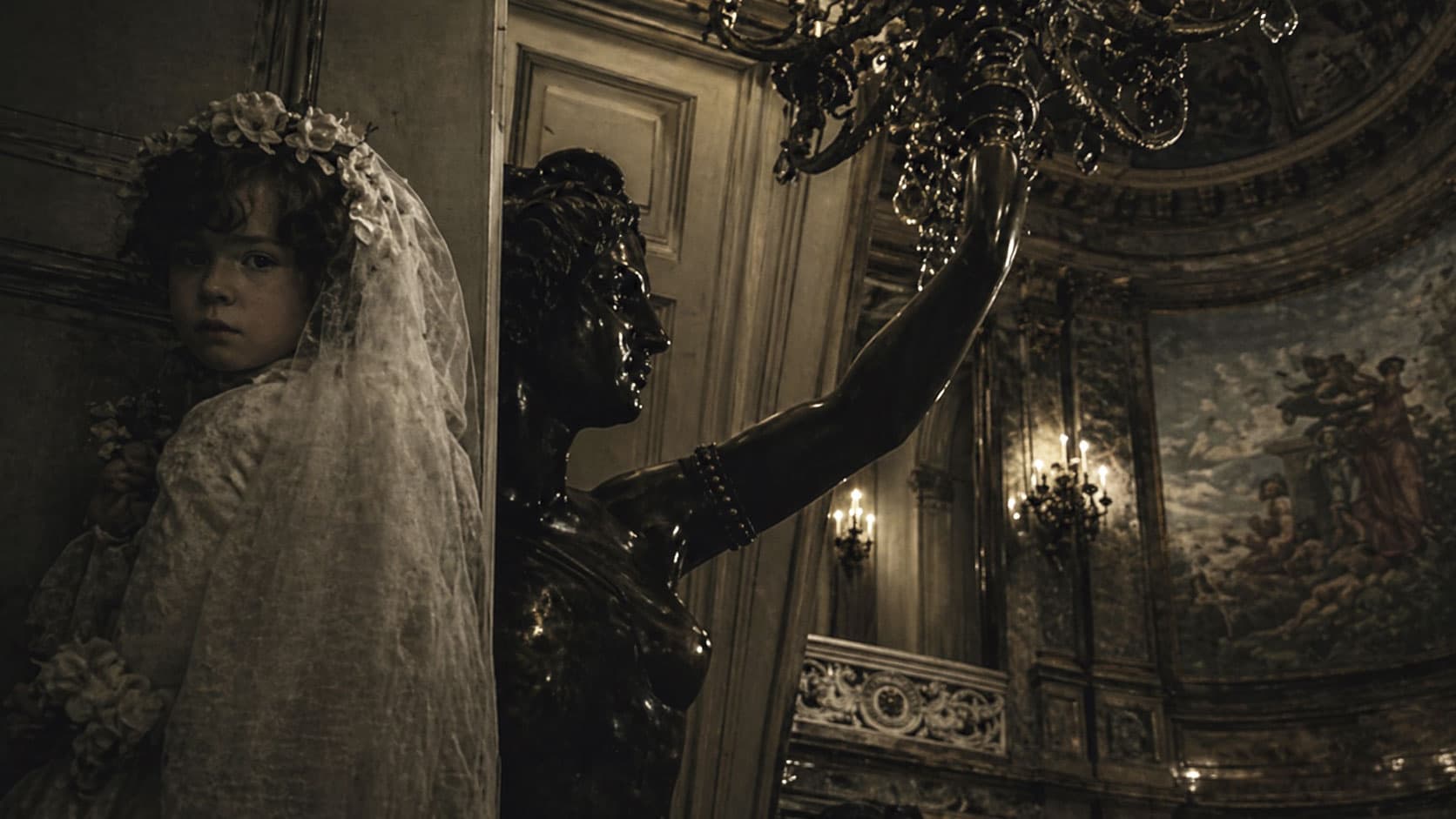
Mysteries & Legends Free Tour
 Free
FreeFree tour
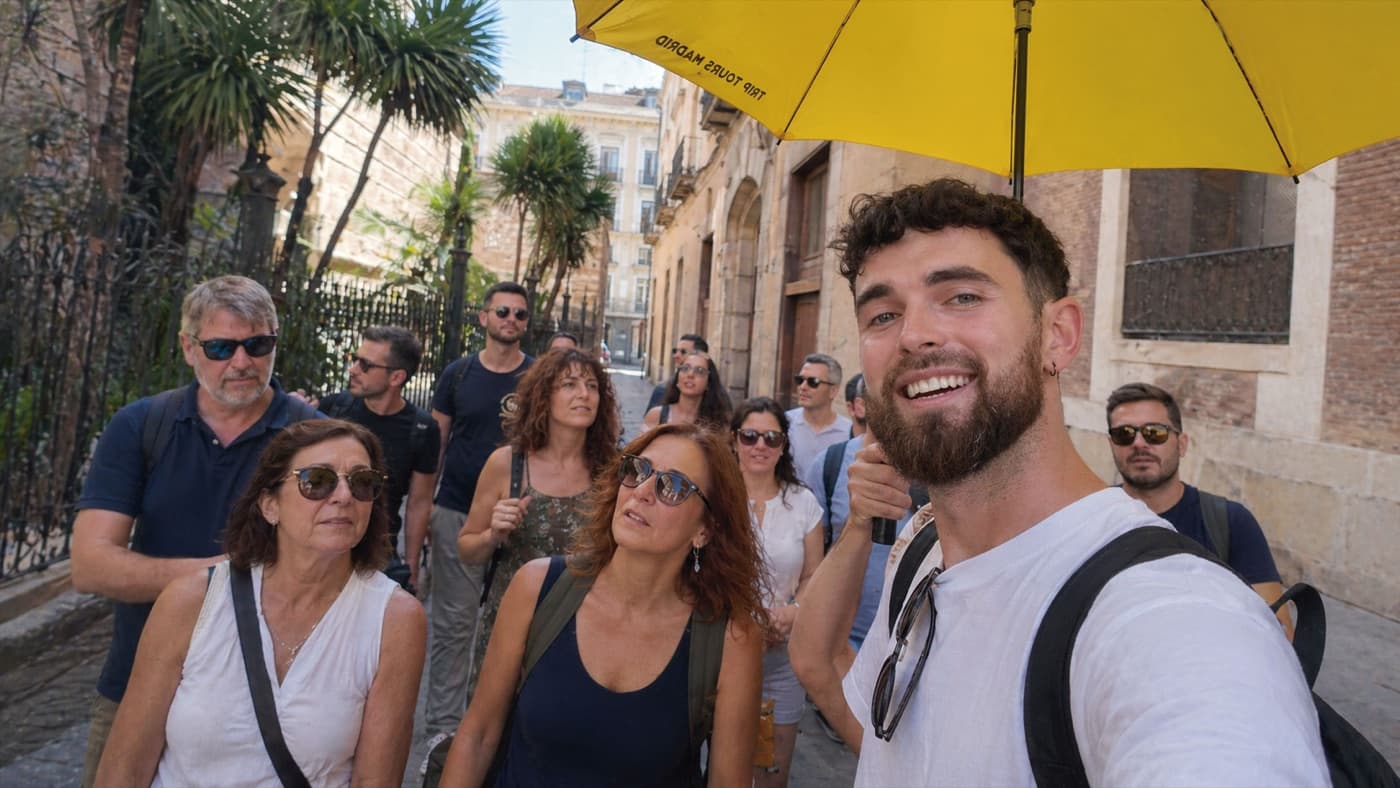
Monumental Madrid Free Tour
 Free
FreeFree tour
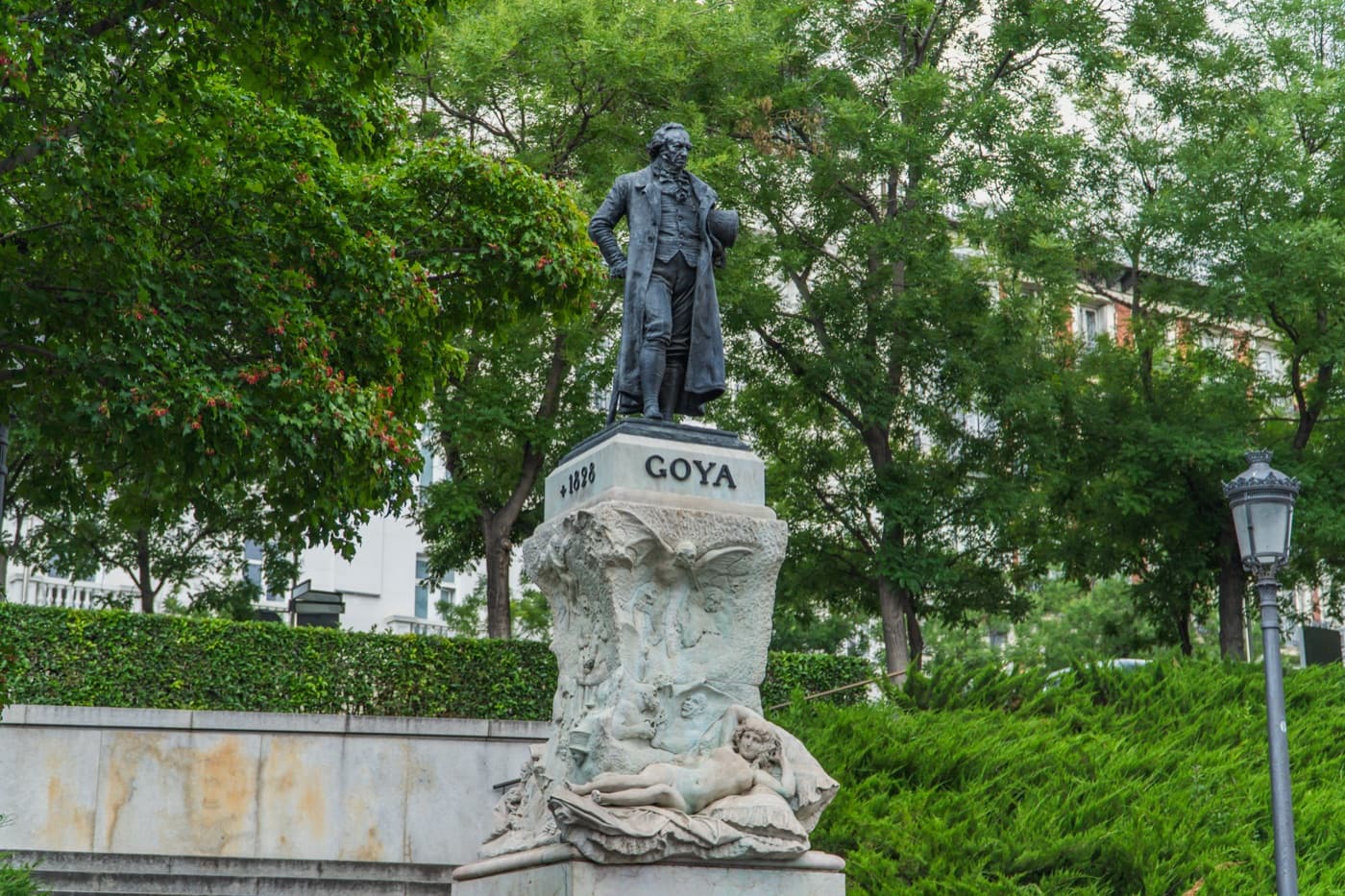
Prado Museum Free Tour
 Free
FreeFree tour
Bohemian Lights Free Tour
 Free
FreeFree tour