In this article (7 sections)
Lower Manhattan, where the city began
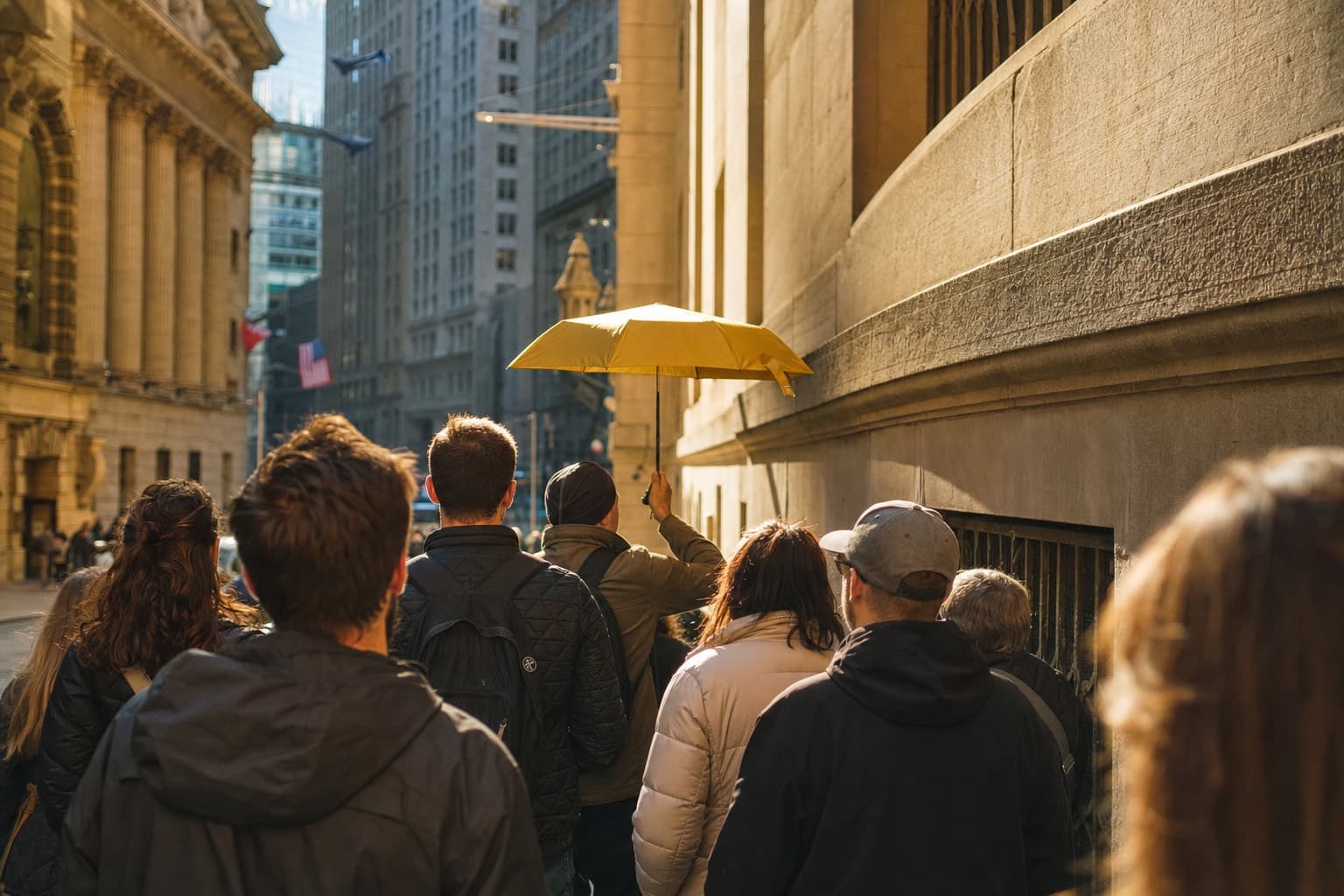
The southern tip of the island is the natural start. In the Financial District, Wall Street holds the New York Stock Exchange and Federal Hall, and a few steps away is the Charging Bull, the bronze bull that everyone photographs. Very close, Trinity Church drives its Gothic spire among the skyscrapers, with the cemetery where Alexander Hamilton rests. Head down toward Battery Park and you will have the bay in front of you: from here the ferries set off to the Statue of Liberty and Ellis Island.
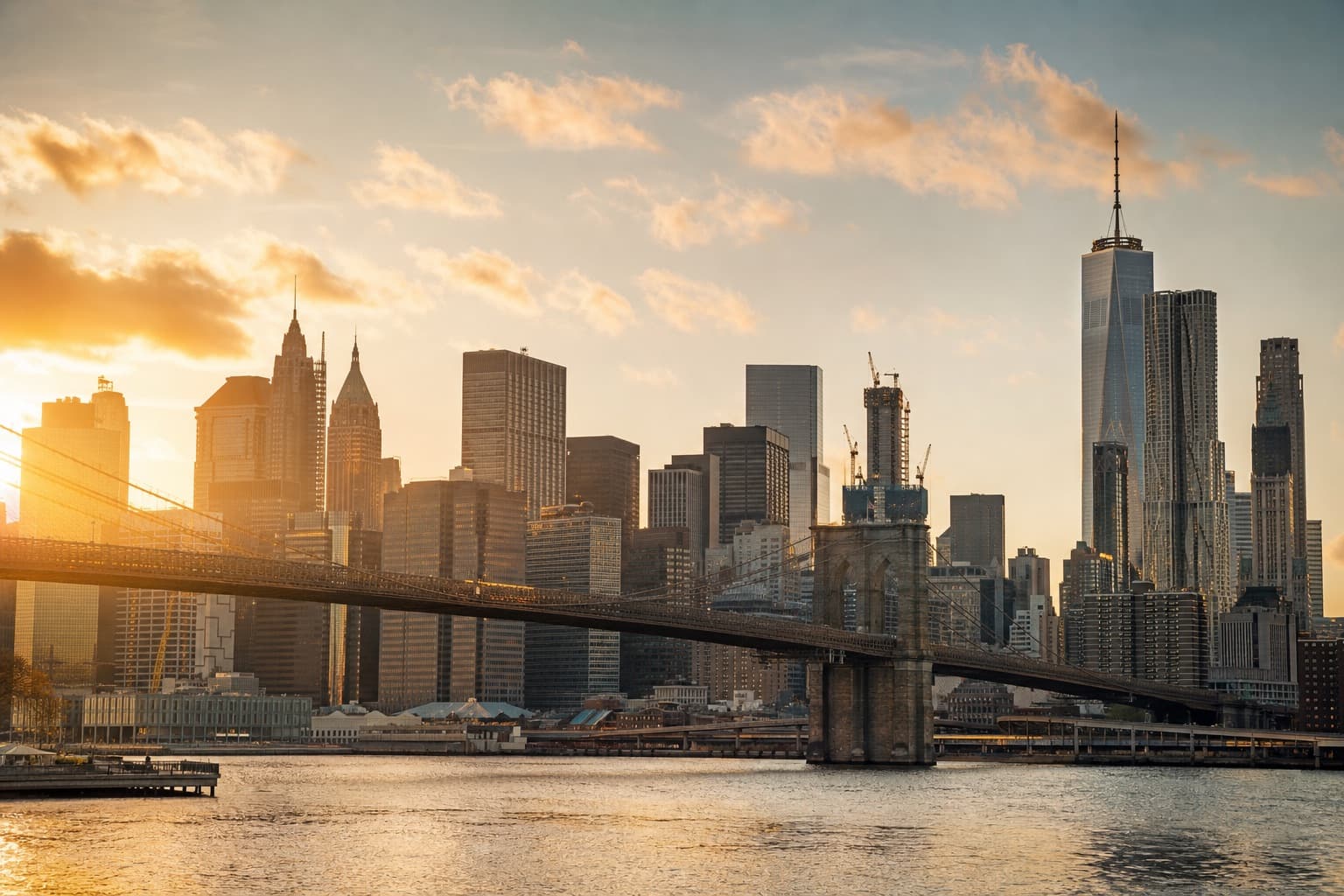
Going up a little you reach the 9/11 Memorial, the two square fountains over the footprint of the Twin Towers, with the names of the victims engraved in the bronze. Right beside it, the One World Trade Center and its One World Observatory viewpoint dominate the whole city. An insider trick: if you do not want to pay for the cruise, the Staten Island Ferry is free and passes close to the Statue of Liberty, with the profile of Manhattan in view on the way back.

Do it with a guide
Free Tour New York: Manhattan and the Financial District
Join us on an unforgettable free walking tour through Manhattan's Financial District and discover the most iconic landmarks of the...
The Brooklyn Bridge and DUMBO
Crossing the Brooklyn Bridge on foot is one of those things you remember. You enter from City Hall, in Manhattan, and the pedestrian walkway runs above the traffic, among the steel cables and the two neo-Gothic towers. It is a little over two kilometers and it is best done early, before it fills up, or at dusk to see the lights come on across the way.
Coming down on the Brooklyn side you land in DUMBO, a neighborhood of old brick factories. On Washington Street is the most repeated photo in the city: the Manhattan Bridge framed between two buildings with the Empire State in the background. From there, a walk along Brooklyn Heights and its Promenade gives you a head-on panorama of Lower Manhattan over the East River.
SoHo, the Village and the south with more character
SoHo is the neighborhood of cast-iron buildings, with their columned facades and fire escapes, today occupied by shops. To the west opens Greenwich Village, a tangle of tree-lined streets and low brownstone houses that breaks the grid. The heart is Washington Square Park and its marble arch, a meeting point for musicians, chess players and New York University students. Bleecker Street and MacDougal Street gather cafés and long-standing jazz venues.
To the east, Little Italy and Chinatown touch almost without a border. Mulberry Street keeps the Italian restaurants and the tricolor flags, while Canal Street plunges you suddenly into stalls, Chinese herbalists and signs in Mandarin. It is one of the sharpest contrasts you can walk in just a few minutes.
Book free, leave a contribution at the end

Midtown: skyscrapers and grand avenues
Midtown is the New York of the postcards. The Empire State Building is still the most famous viewpoint, though the Top of the Rock, at the top of Rockefeller Center, has one advantage: from there you do see the Empire State itself in the photo. Between the two runs Fifth Avenue, with St Patrick's Cathedral, the Public Library and its stone lions, and the green breather of Bryant Park.
Do not miss the Flatiron Building, the iron-shaped building at the junction of Broadway and Fifth, or Grand Central Terminal, with its ceiling painted with constellations. And then there is Times Square, with its giant screens: it is tiring, but you have to see it at least once, better at night. This whole area is walked easily, and a free tour of Midtown helps put a name and an anecdote to each skyscraper before going up any viewpoint.
Central Park and the Museum Mile
Central Park is so big that you could spend the whole day inside it. For a first visit on foot, enter from the south and look for The Mall, the avenue of elms that leads to the Bethesda Terrace and its fountain beside the lake. Nearby are the Bow Bridge, the most photographed iron bridge in the park, and Strawberry Fields, the Imagine mosaic dedicated to John Lennon opposite the Dakota building, where he lived.
The east flank of the park is the Museum Mile, on Fifth Avenue. There line up the Metropolitan Museum of Art, one of the largest in the world, the Guggenheim with its spiral ramp by Frank Lloyd Wright and several more. Even if you do not go in, the facade of the MET and its steps are already an essential stop.
The High Line, Chelsea and a jump to Harlem
The High Line is an old elevated railway line turned into a landscaped walk. It runs from the Meatpacking District to Hudson Yards, about two and a half kilometers above the streets of the West Side, among plants, benches and views of the Hudson River. Along the way is Chelsea Market, a food market in an old biscuit factory, and at the end appears the Vessel, the honeycomb-shaped structure of staircases.
If you have the stamina, head north, to Harlem. It is another rhythm of city: brownstone houses with stoops, the Apollo Theater where soul legends made their debut and the churches where gospel rings out on Sundays. Walking Harlem is to understand that New York does not end at Central Park.
Frequently asked questions
- How many days do I need to see New York on foot?
- With three or four full days you cover the essentials without stress: one day for Lower Manhattan and the Brooklyn Bridge, another for Midtown and Fifth Avenue, one for Central Park and the museums, and the last for the High Line, Chelsea and Harlem. If you are short on time, in two intense days you see the main sights leaning on short stretches of subway.
- Is it safe to walk around New York?
- The tourist areas of Manhattan and Brooklyn are safe and very busy at almost any hour. As in any big city, it is worth watching your bag in Times Square and on the subway, and at night moving through streets with people. Neighborhoods like Lower Manhattan, Midtown, the Village or DUMBO are walked without any problem.
- How much does a free tour of New York cost?
- The free tour is booked with no payment up front, though it is worth grabbing a spot because they are limited. At the end you give a contribution for the guide, usually between 15 and 20 euros per person. It is an affordable way to get some context on the first day before moving around on your own.
- What is the best time of year to walk New York?
- Spring, from April to June, and autumn, from September to November, are the best: pleasant temperatures and Central Park or the High Line at their peak. Summer is humid and hot, and winter very cold, with snow and wind between the skyscrapers, though December has the appeal of the Christmas lights on Fifth Avenue and the Rockefeller Center tree.