In this article (7 sections)
How to plan two days on foot in Madrid
The center of Madrid is smaller than it looks on the map. From Puerta del Sol, kilometer zero of Spain's road network, you can walk to the Royal Palace in fifteen minutes and to the Prado Museum in a little over twenty. Both of the days I suggest set off from Sol, so if you stay near Calle Mayor, Calle Arenal or Plaza de Santa Ana you will have almost everything within easy reach. Bring comfortable shoes and leave the car parked: the old town is all narrow lanes, slopes and cobblestones.
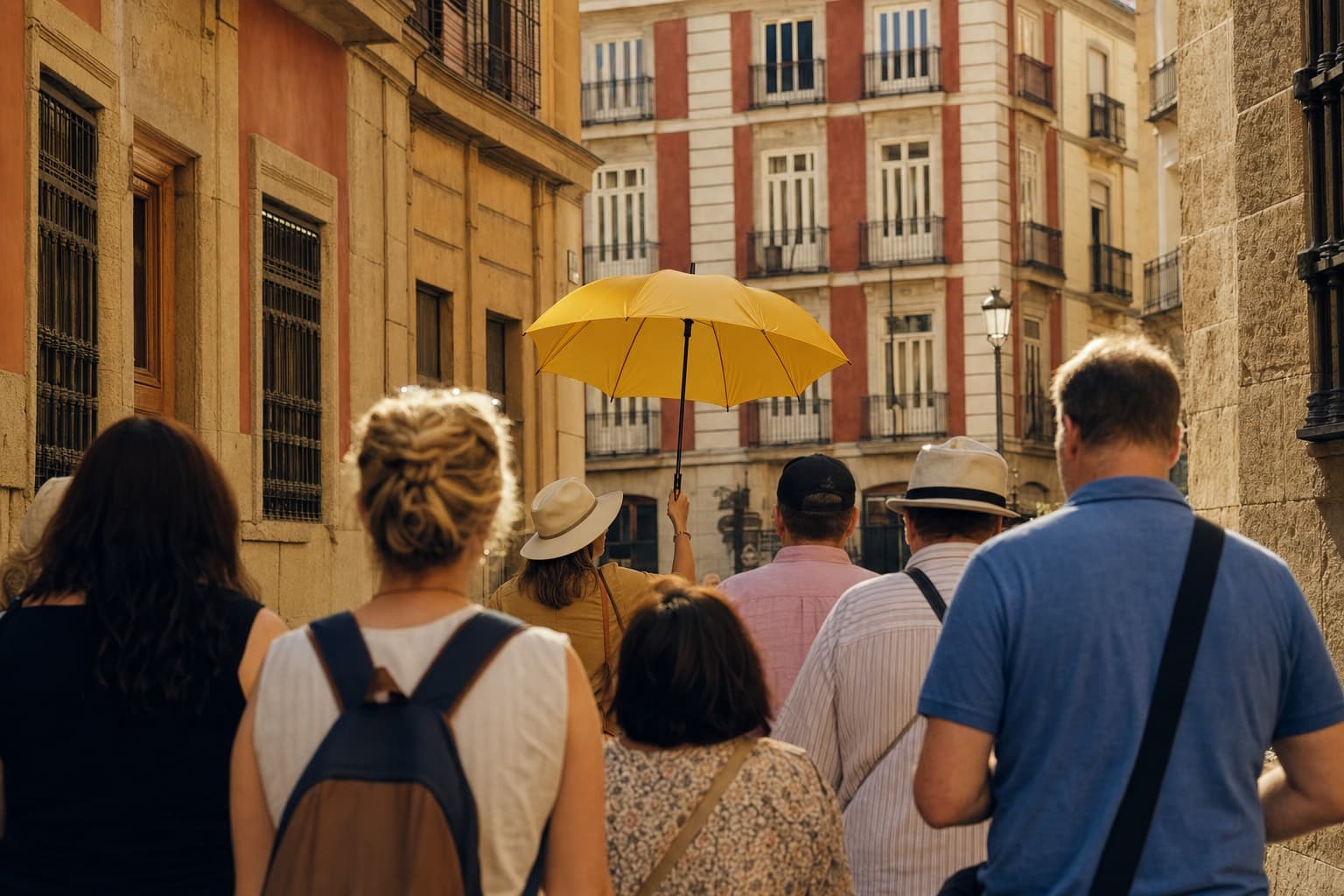
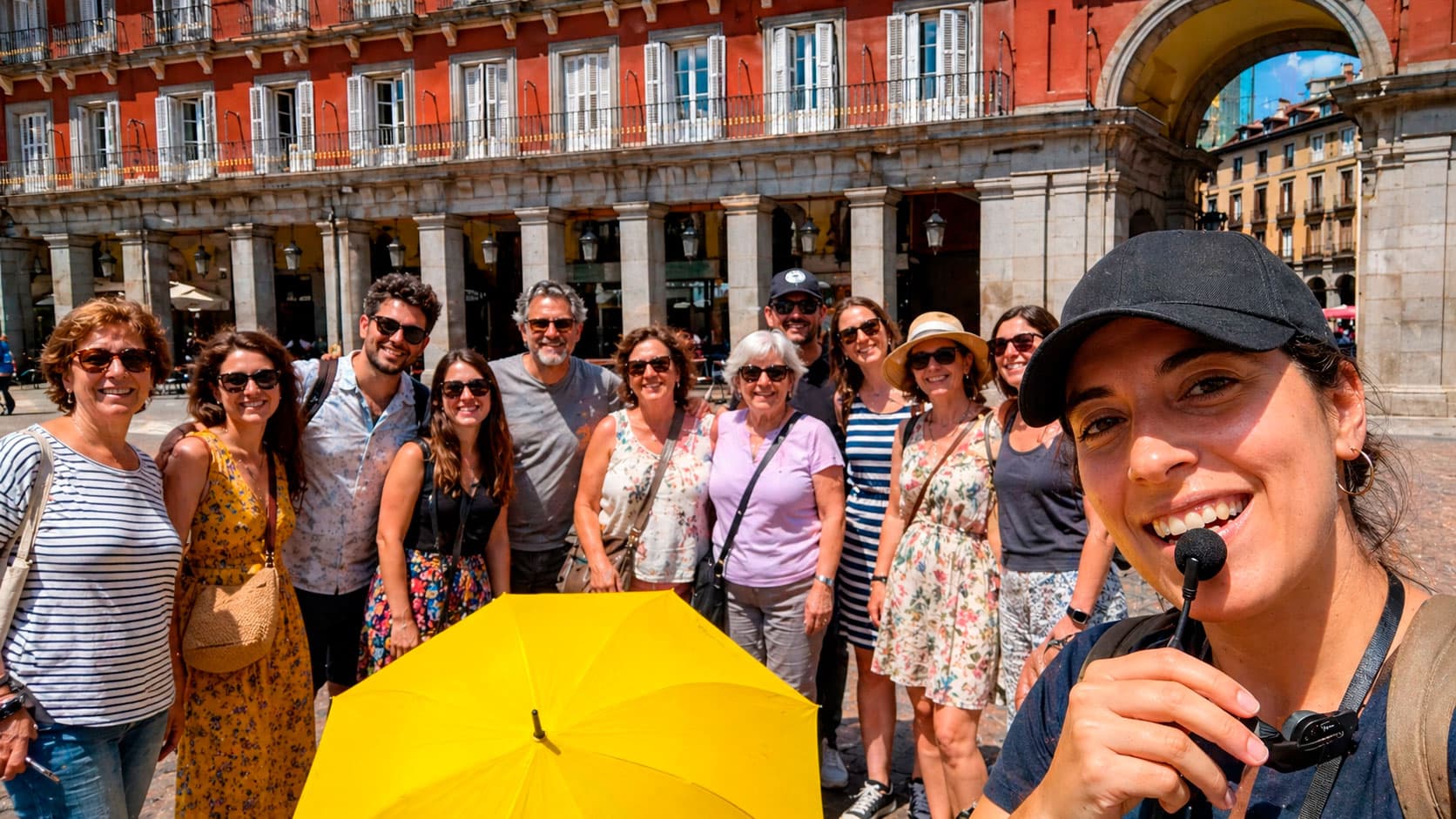
If it is your first time in the city, a free tour of Habsburg Madrid is the most direct way to understand what you are looking at before you explore on your own. It usually lasts a little over two hours, sets off from the Sol area or Plaza Mayor and works on a voluntary contribution of between 15 and 20 euros per person at the end of the walk. In a single morning it lays out the mental map of centuries of history that you will then walk through at your own pace.
Do it with a guide
Habsburg Madrid Free Tour
Imperial Madrid: Plaza Mayor, the Royal Palace and the Habsburg heart of the city.
Day 1 morning: Habsburg Madrid
Start at Puerta del Sol, beside the statue of the Bear and the Strawberry Tree and the clock on the Casa de Correos that strikes the New Year's Eve chimes. Head up Calle Mayor to the Plaza Mayor, closed off by the Casa de la Panadería and presided over by the equestrian statue of Philip III. Leave through the Arco de Cuchilleros and take a look at the Mercado de San Miguel, with its iron framework, though mid-morning it is better to look than to eat: the prices are for show.
Carry on along Calle Mayor to the Plaza de la Villa, with the Casa de Cisneros and the old town hall, and continue to the Almudena Cathedral and the Royal Palace, facing each other. The Plaza de la Armería, between the two, has one of the best views toward the mountains. Close the morning in the Plaza de Oriente, among the gardens and the Teatro Real, and if you still have energy walk down to the Campo del Moro.
Day 1 afternoon: La Latina and the Barrio de las Letras
After lunch, cross over to La Latina, the traditional heart of Madrid. Cava Baja lines up old taverns one after another, and very close by you will find the Basílica de San Francisco el Grande, with its huge dome, and the views from the Jardín de las Vistillas. If your visit falls on a Sunday morning, El Rastro fills the Ribera de Curtidores with market stalls; in the afternoon the neighborhood is quieter and nicer for a stroll.
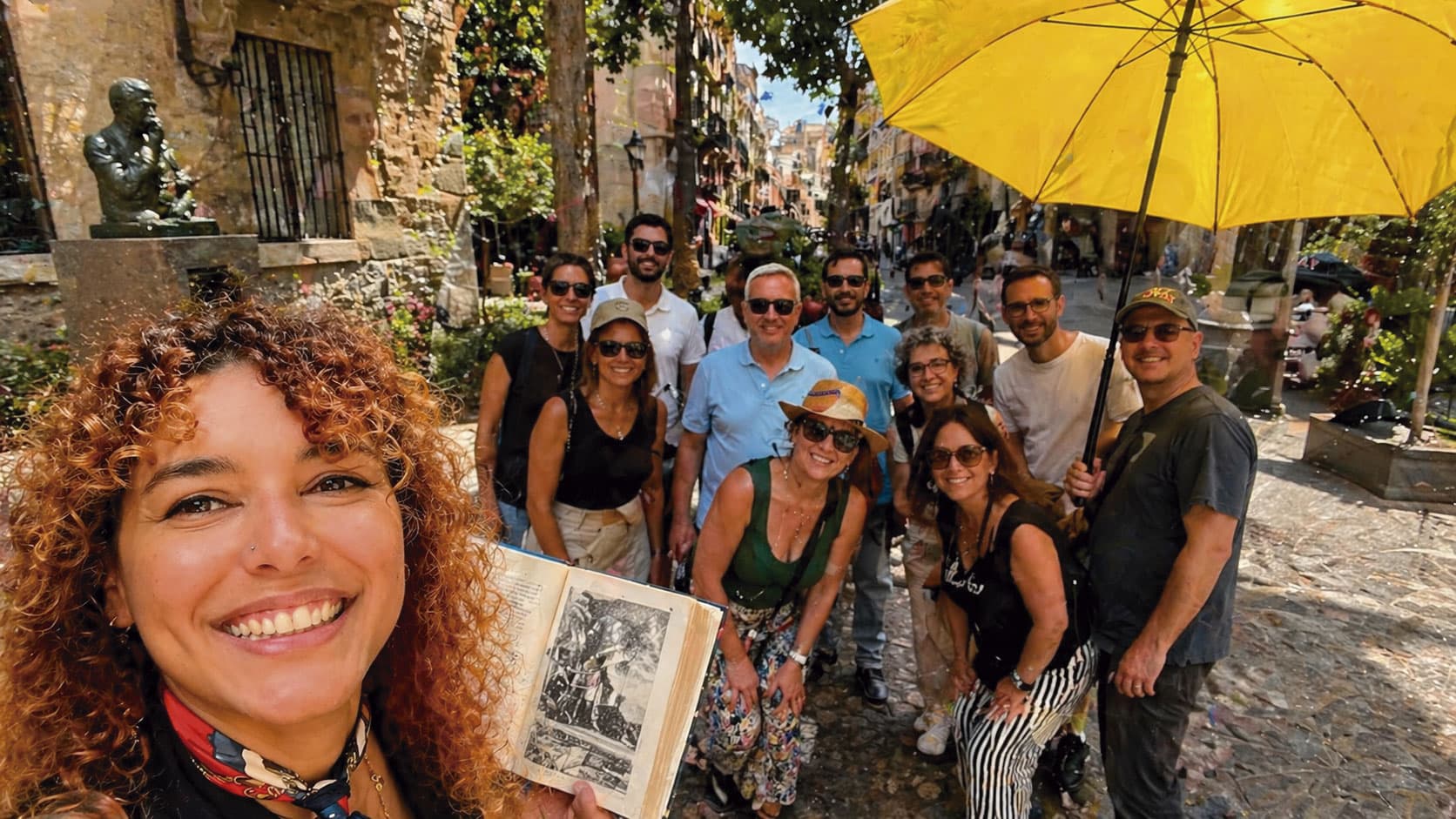
Head back east and step into the Barrio de las Letras, where Cervantes, Lope de Vega and Quevedo once lived. Calle de las Huertas has verses written into the pavement, and the Plaza de Santa Ana, with the Teatro Español and the statue of García Lorca, is a good place for a break. From here you are a step away from Puerta del Sol, so you close the first day where you began it.
Book free, leave a contribution at the end
Day 2 morning: the Paseo del Arte and El Retiro
The second day is for the Paseo del Prado and the so-called art triangle. The Prado Museum holds Velázquez, Goya and Bosch; the Thyssen-Bornemisza completes what the Prado lacks, from the Gothic to Pop; and the Reina Sofía guards Picasso's Guernica. Seeing all three in one morning is impossible, so pick one based on what moves you. The Prado is free for the last two hours of the day if you would rather keep the morning for walking.
When you finish, head up the Paseo del Prado to the Cibeles fountain, with the Palacio de Comunicaciones behind it, and continue to the Puerta de Alcalá. Just behind it opens the Retiro Park: circle the boating lake and look for the Palacio de Cristal, a structure of iron and glass built for a nineteenth-century exhibition. It is the best corner of the park to sit for a while.
Day 2 afternoon: Gran Vía, Malasaña and sunset at Debod
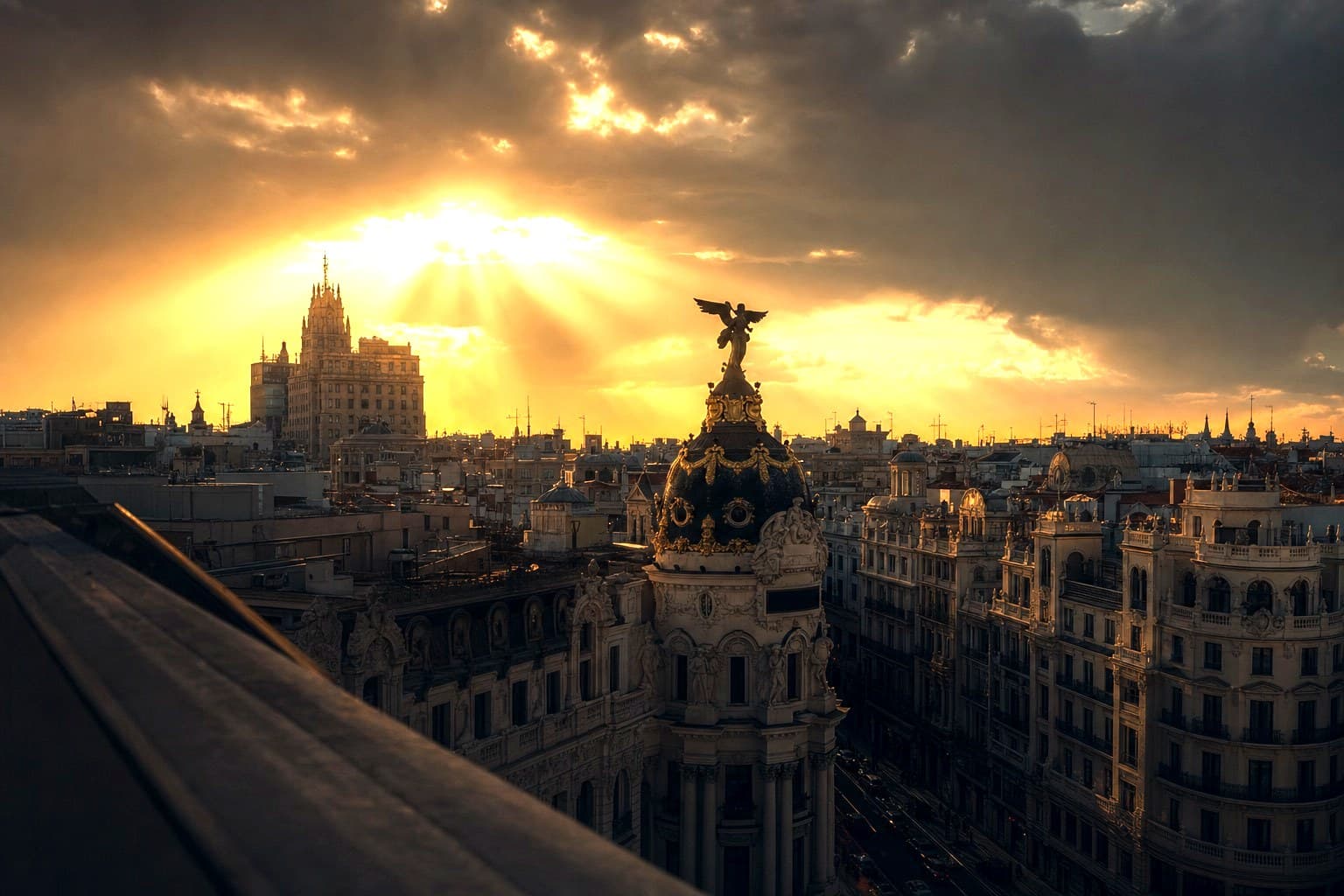
In the afternoon switch gears and head up to the Gran Vía, the avenue of theaters, old cinemas and the Metrópolis building with its crowned dome. From the Plaza de España, with its monument to Cervantes, you can turn north toward Malasaña and Chueca, two neighborhoods of narrow streets, small shops and terraces. The Plaza del Dos de Mayo is the heart of Malasaña and a good spot for an unhurried drink.
Save the end of the day for the Temple of Debod, a genuine Egyptian temple gifted to Spain and rebuilt stone by stone in the Parque del Oeste. It has become Madrid's sunset viewpoint: the sun sets right behind it, over the Casa de Campo, and in summer people arrive early to get a place. Go with time to spare and find a spot on the low wall.
Places to eat and a few practical tips
You do not need to go out of your way for lunch. On the first day you have Cava Baja and the streets of La Latina full of taverns, and near the Plaza Mayor you will find the fried-squid sandwiches that are a house specialty, above all on Calle Botoneras. On the second day, the Huertas area, the Chueca neighborhood and the streets around the Antón Martín market all sort out lunch and dinner nicely.
Two warnings. First, the big museums close one day a week or change their hours on public holidays, so it is worth checking before you turn up at the door. Second, the Madrid sun beats down hard at midday in summer: keep the middle hours for interiors, museums or a shaded terrace, and save the long walks for early morning and late afternoon.
Day trips from Madrid
Day trips from Madrid
Frequently asked questions
- Can you really see Madrid in two days on foot?
- Yes. The historic center, the Paseo del Arte and the surrounding neighborhoods are very close together: from Puerta del Sol to the Royal Palace is a fifteen-minute walk and to the Prado a little over twenty. With two well-planned days, one for Habsburg Madrid and another for the museums and El Retiro, you can cover it without stress and barely touch the metro.
- What is the best starting point each day?
- Puerta del Sol. It is kilometer zero, it is well connected and both routes set off from there: west on the first day (Plaza Mayor, Almudena, Royal Palace) and east on the second (Paseo del Prado, Cibeles, El Retiro). If you stay near Calle Mayor or Plaza de Santa Ana, you save time.
- Which museum should I choose if I only have time for one?
- It depends on what you are after. The Prado for classic Spanish painting, with Velázquez and Goya; the Reina Sofía if you want to see the Guernica; and the Thyssen if you prefer a broad journey through the history of European art. The Prado and the Reina Sofía both have free time slots at the end of the day.
- Is it worth starting with a free tour?
- If it is your first time, it helps a lot. A free tour of Habsburg Madrid, a little over two hours long and with a contribution of 15 to 20 euros per person, lays out the history of the center before you explore on your own for the rest of the day. It sets off from the Sol area or Plaza Mayor.