In this article (7 sections)
When a modest town became a capital
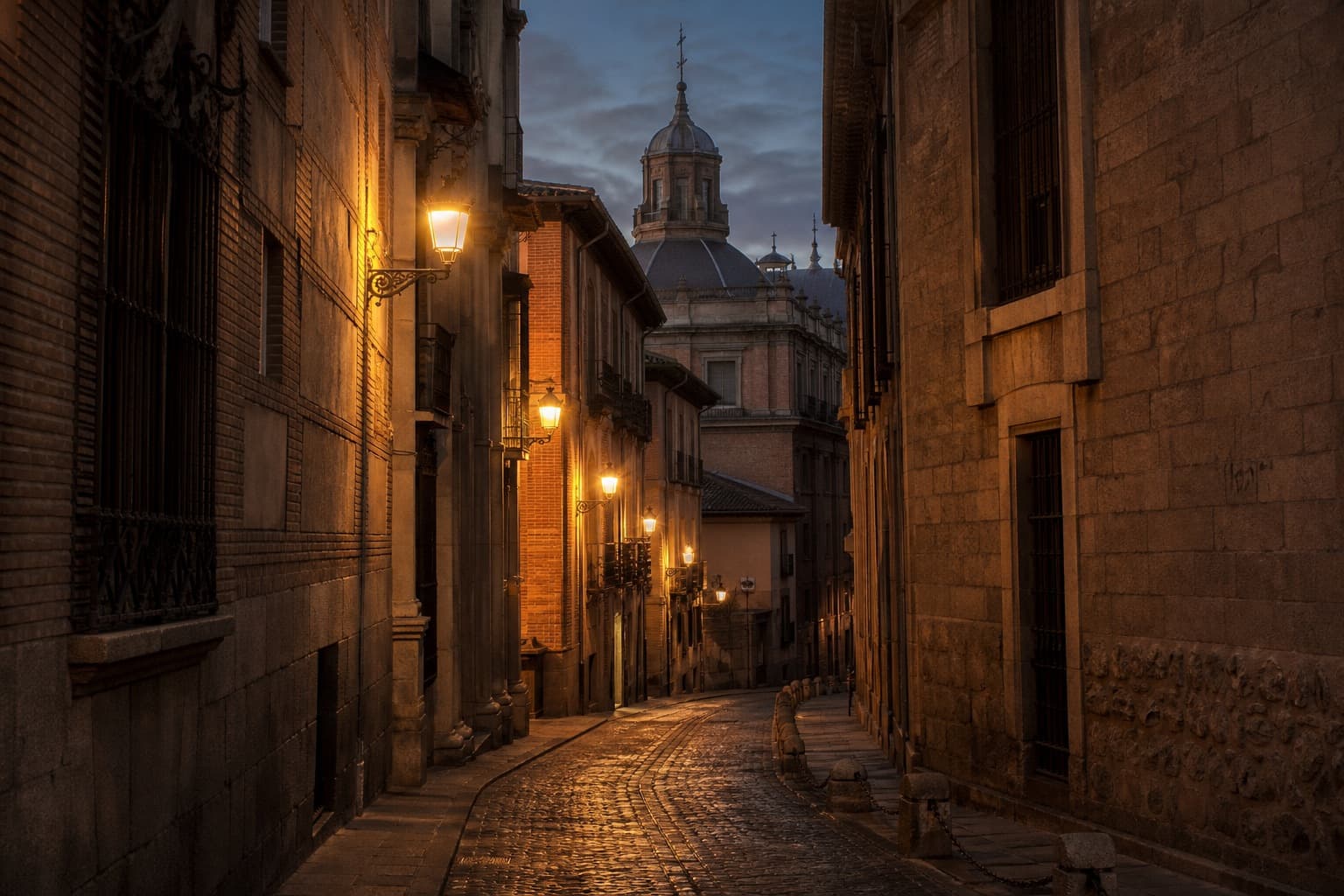
In 1561, Philip II moved the court to Madrid and a modest town came to rule half the world almost overnight. The heart of it all was the Real Alcázar, the fortress that stood where the Royal Palace is today and that burned to the ground on Christmas Eve of 1734. Around it grew, in a great hurry, the maze of lanes and convents we still call the Habsburg quarter.
Madrid filled so quickly with officials and nobles that the crown forced residents to give up part of their homes to house them. To dodge that burden, many built the so-called casas a la malicia, houses that pretended to have a single floor from the outside while hiding rooms within. On the steps of the church of San Felipe el Real, next to Sol, the most famous rumor mill in the city was also in business, where soldiers and rogues invented and spread the news long before it was true.
Do it with a guide
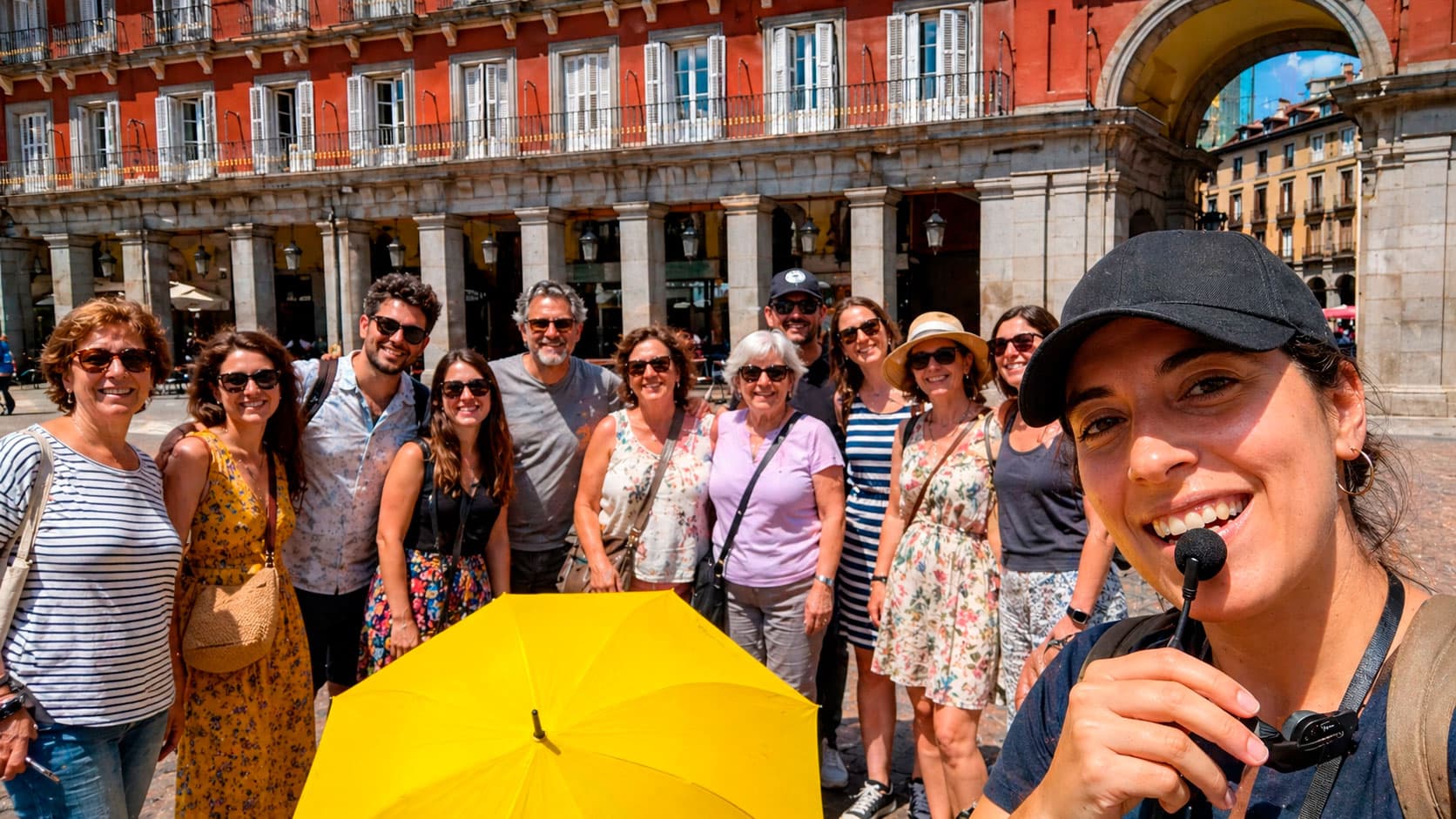
Habsburg Madrid Free Tour
Imperial Madrid: Plaza Mayor, the Royal Palace and the Habsburg heart of the city.
Crimes, bones and a statue with a legend
The Plaza Mayor you now stroll across calmly was for centuries the great stage of the city, and not always for good. Beneath its balconies there were proclamations of kings and bullfights, but also autos-da-fé of the Inquisition and public executions before thousands of people leaning out of the windows. In the center Philip III rides an equestrian statue begun by Giambologna and Pietro Tacca that did not reach the square until 1848. Legend has it that for years the sparrows slipped in through the horse's open mouth and died inside, until it had to be sealed.
The most famous ghost in the quarter lives a little further north, next to the Plaza del Rey, in the sixteenth-century House of the Seven Chimneys. The legend tells of Elena, a young woman linked to the court of Philip II who was found dead without explanation and whose body was never recovered. Ever since, a figure of a woman with a torch is said to appear on the roof on stormy nights. What is unsettling is that, during a renovation of the building, a skeleton was found alongside some coins from the time of Philip II. Today it is the seat of the Ministry of Culture.
Relics and cloistered convents
A short walk from the Plaza de Oriente, the Royal Monastery of La Encarnación keeps Madrid's most famous relic: a vial with the blood of Saint Pantaleon that, according to tradition, liquefies every 27 July and stays solid the rest of the year. It was founded by Margaret of Austria, wife of Philip III, in 1611, and every summer a line forms to check the phenomenon with your own eyes.
Cloistered life is still very present in the quarter. In the convent of the Corpus Christi, known as Las Carboneras, near the Plaza de la Villa, the nuns still sell pastries and shortbread through a revolving hatch, without you ever seeing their faces. They are small gestures that snap you straight back to the seventeenth century.
Book free, leave a contribution at the end
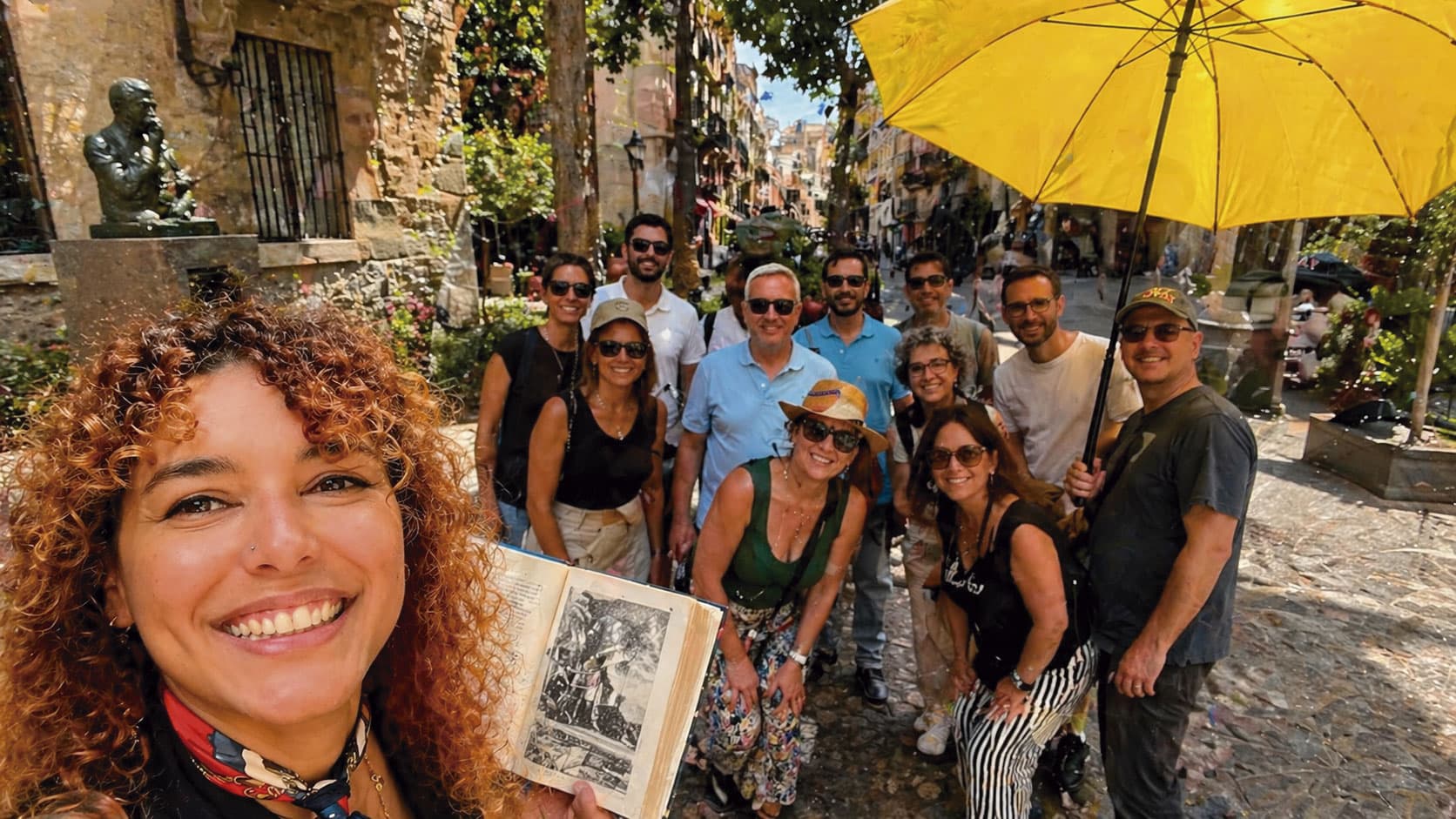
The medieval maze of the Plaza de la Villa
The Plaza de la Villa sums up three centuries in three buildings. The Torre de los Lujanes is the oldest thing still standing, from the fifteenth century, and tradition holds that King Francis I of France was held prisoner there after his defeat at the Battle of Pavia. Across from it, the Casa de Cisneros is from the sixteenth century, and the Casa de la Villa, the old town hall, was built by Juan Gómez de Mora in the seventeenth.
Around it tangles the narrowest Madrid. Calle del Codo bends at an angle, as its name (elbow) suggests, and opens onto corners where a car would not fit. It is the kind of alley that most visitors cross without a glance and that, even so, holds more history than many famous facades.
Before the Habsburgs: the Arab wall and the cats
Before the Habsburgs, Madrid was Mayrit, an Andalusi fortress founded by the emir Muhammad I in the ninth century. From that city, stretches of the Arab wall survive on the Cuesta de la Vega, next to the Almudena, in the park that bears the emir's name. Tradition places there the legend of the Virgin of the Almudena, hidden in the wall as the Muslims arrived and reappearing in 1085, when Alfonso VI reconquered the town, between two candles that were still burning after centuries.
This was the heart of the Morería, around the Plaza de la Paja, the medieval market with the Capilla del Obispo and the discreet Jardín del Príncipe de Anglona. Here too are San Andrés, San Pedro el Viejo with its Mudéjar tower and, higher up, San Nicolás de los Servitas, the oldest church in Madrid. It is the face of the quarter that almost no one walks, a few meters from the bustle but in another century.
And this is where the nickname of the people of Madrid is born. Tradition says that, during the capture of 1085, a young man climbed the wall like a cat to open the gates of the town, and from that feat came the nickname the locals carry with pride.
Flavors with history and how to walk it
Cava Baja and Cava Alta occupy what was once the moat of the wall and today hold some of the oldest taverns in the city. On Calle de Cuchilleros, Botín is still open, recognized by Guinness as the oldest restaurant in the world, with its wood-fired oven of lamb and suckling pig; it opened in 1725, already past the Habsburg dynasty, but it breathes the same streets. To finish, a cup of hot chocolate with churros at San Ginés, next to one of the oldest churches in Madrid, closes the walk exactly as it should.
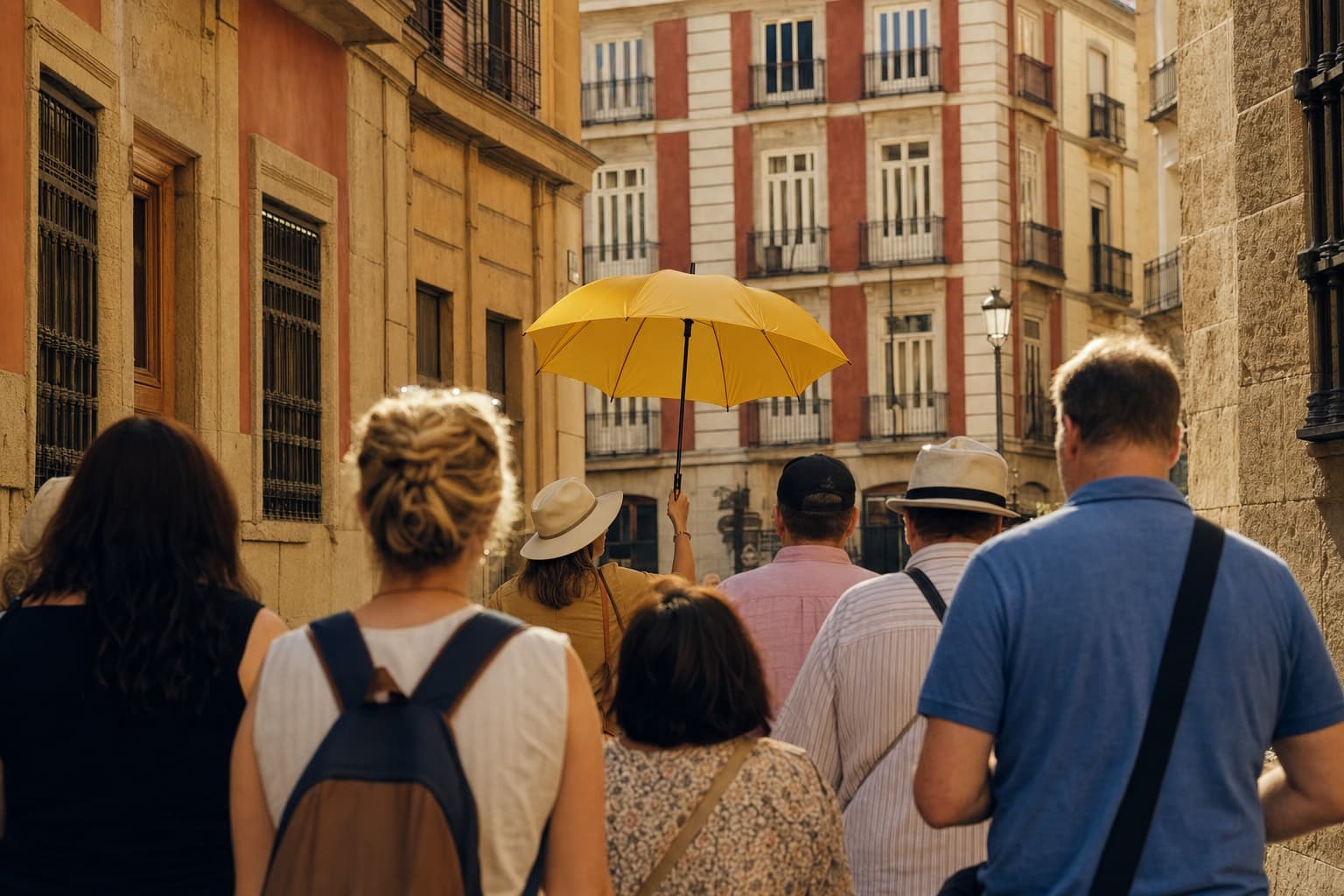
All of this is so tightly packed that you can walk it slowly without rushing, but it changes a great deal if someone places each legend on the exact spot where it happened. A free tour of Habsburg Madrid strings together the Torre de los Lujanes, the House of the Seven Chimneys and the Morería in a couple of hours, and turns what would be pretty stones into the stories that made them famous. It is the easiest way to place each tale before you wander off on your own, and at the end of the walk you thank the guide with a contribution of between 15 and 20 euros per person.
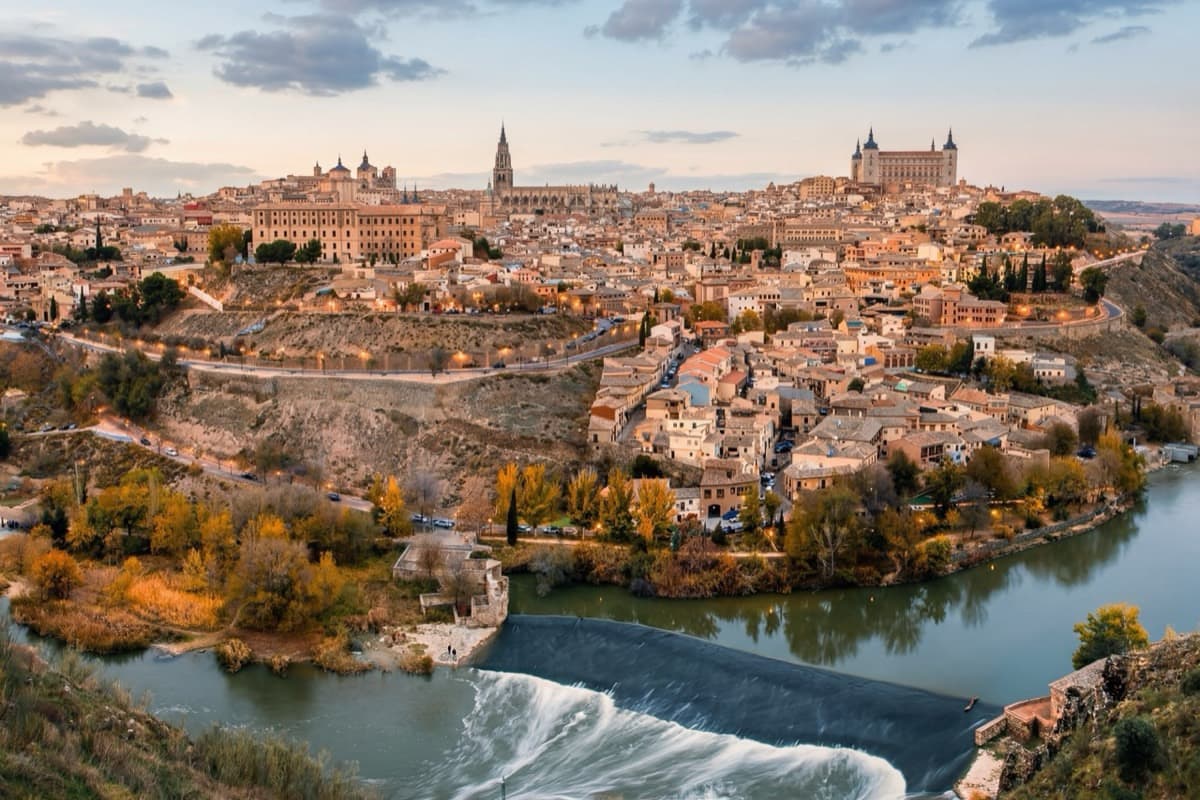
Day trips from Madrid
Day trips from Madrid
Frequently asked questions
- Which quarters and squares make up Habsburg Madrid?
- Habsburg Madrid is the old town that Philip II and his successors turned into the court. Its axis runs from Puerta del Sol to the Plaza de la Villa and drops down to the Morería and the Plaza de la Paja, the heart of medieval Madrid. Along that route are Cava Baja, Calle del Codo, the Monastery of La Encarnación and most of the corners with a legend.
- How long does it take to walk Habsburg Madrid?
- The distances are short and the whole quarter can be seen in a morning. A relaxed walk on your own will take you between two and three hours if you stop to look; a guided free tour usually lasts around two hours and saves you the work of finding each place on the map.
- When can you see the blood of Saint Pantaleon?
- The vial with the blood of Saint Pantaleon is displayed in the Royal Monastery of La Encarnación, next to the Plaza de Oriente. Tradition says it liquefies every 27 July, the saint's feast day, and long lines form that day to see it. The rest of the year you can visit the monastery and its reliquary within the usual opening hours.
- Is a free tour of Habsburg Madrid worth it?
- If it is your first time in the quarter, very much so. A free tour brings together in a single walk the history and legends scattered across the Plaza de la Villa, the Morería and the Monastery of La Encarnación, with no tickets or rigid schedules. At the end you thank the guide with a customary contribution of between 15 and 20 euros per person, depending on how much the walk gave you.