In this article (7 sections)
From Jewish maze to the Santa Cruz quarter
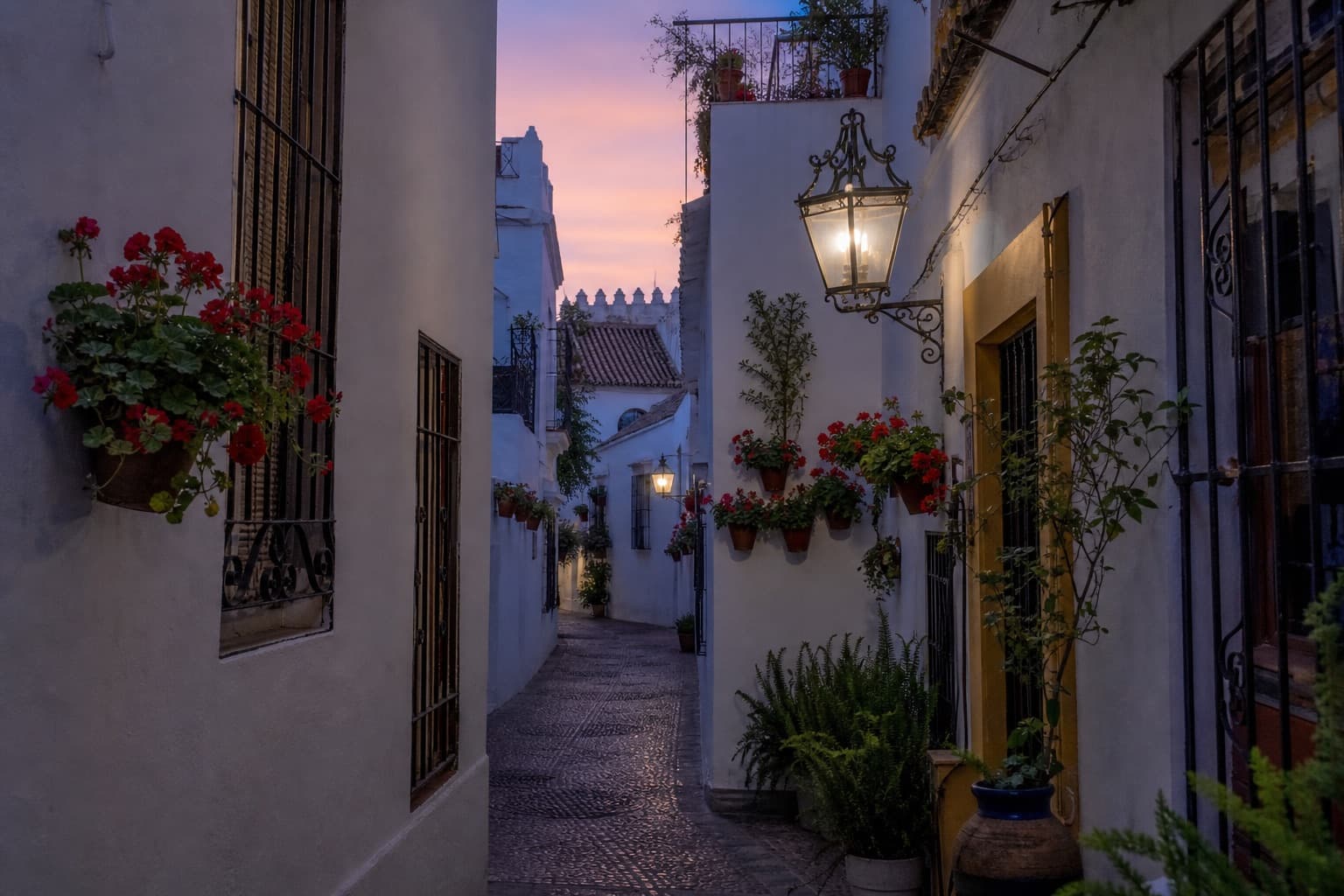
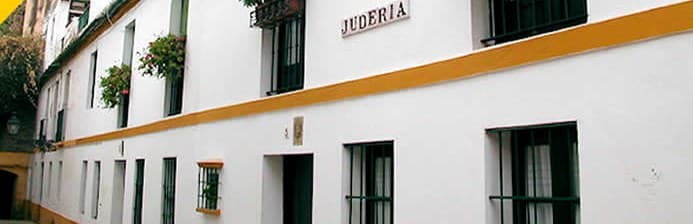
Before it was a postcard corner, this part of Seville was one of the largest Jewish quarters on the peninsula, second only to that of Toledo. It stretched between the walls of the Real Alcázar and the old city wall, and from that time the names remain: Calle Judería, the Callejón del Agua, Calle Vida and Calle Muerte, two twin streets that lead off the Plaza de la Alianza. The pogrom of 1391 devastated the quarter and the expulsion of 1492 emptied it completely. The current name comes from a church, that of Santa Cruz, which marked the Christian character of the place once the Jewish community was gone.
It is worth knowing one thing so as not to be fooled: the maze you walk today is not entirely medieval. In the early twentieth century, ahead of the 1929 Ibero-American Exposition, squares like Doña Elvira and Santa Cruz were remodeled and planted with orange trees and tiles to give them that unmistakable Andalusian air. The winding layout is indeed old, but the stage set owes a good deal to romantic invention. That takes nothing away from its charm; it only helps you read the quarter with a sharper eye.
Do it with a guide
Seville Monumental Free Tour
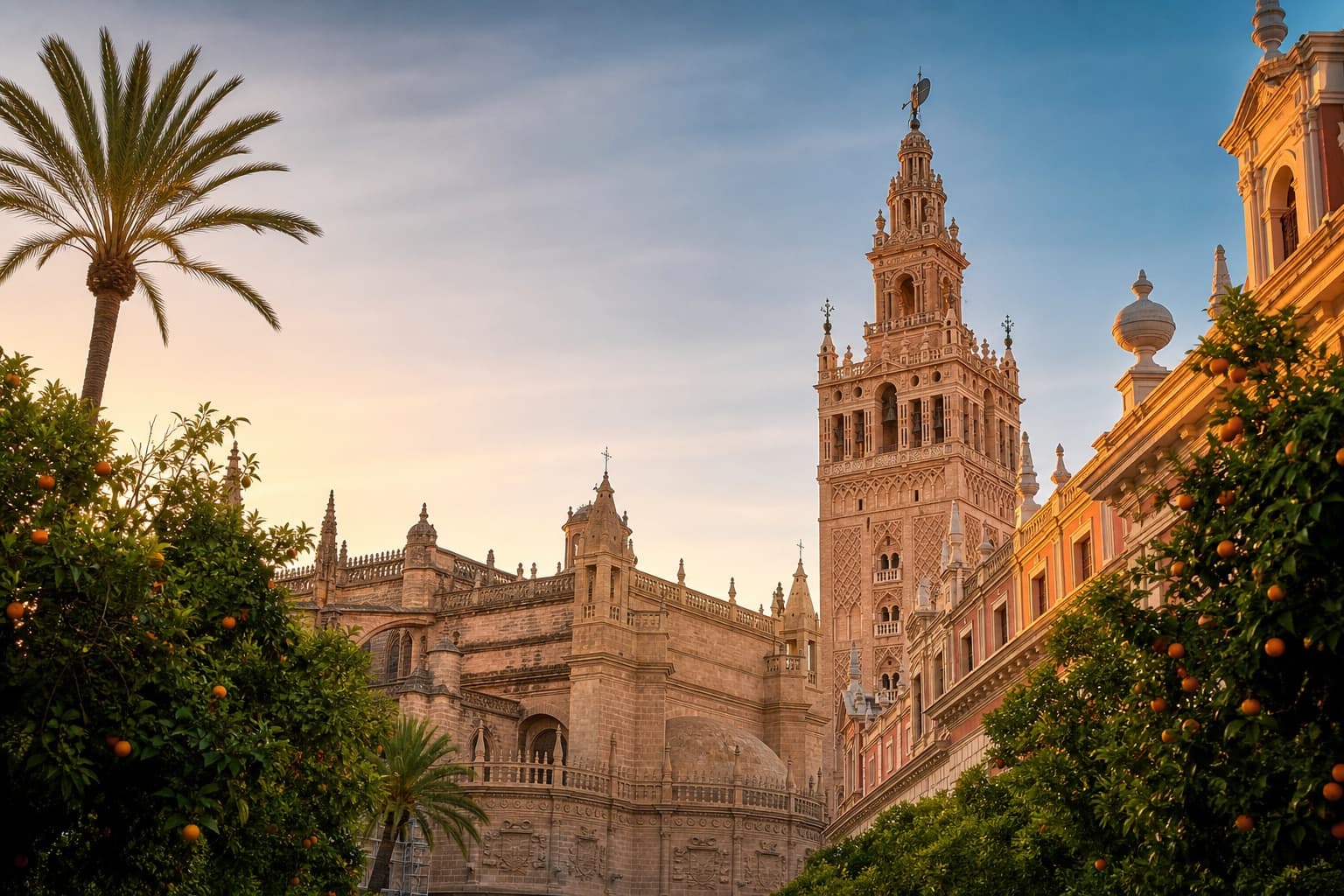
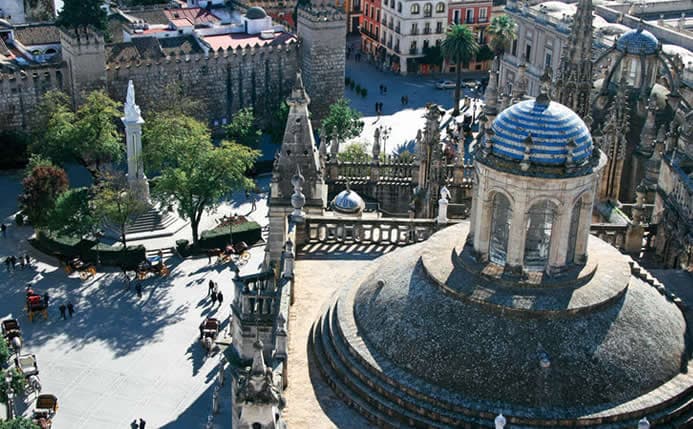
The Cathedral and the Giralda, the Royal Alcázar, the Archive of the Indies and the Torre del Oro: Golden Age Seville.
The skull of Calle Susona
The best-known legend of the quarter is told a few steps from the walls of the Alcázar, on Calle Susona. Susona Ben-Susón was the daughter of Diego Susón, a wealthy convert who, according to tradition, led a plot against the newly installed Court of the Inquisition around 1481. Susona was in love with a Christian knight and, to save him, she revealed the conspiracy. The betrayal ended with her father and other conspirators executed.
What made the story famous is the ending. It is said that Susona, remorseful and alone, asked that when she died her skull be hung on the door of her house as punishment, so that everyone would see what she had done. For centuries the street was called Calle de la Muerte, and over time it took the name of its heroine. Today a tile with a skull recalls the episode on the facade, and it is one of the essential stops when you discover the quarter at a calm pace.
King Don Pedro and the head on the wall
Very close to Santa Cruz, on Calle Cabeza del Rey Don Pedro, another of the great Sevillian legends survives. Its protagonist is Pedro I of Castile, nicknamed the Cruel by some and the Just by others, the same king who had the Mudéjar palace of the Alcázar built in the fourteenth century. He was said to go out at night to roam the city and that, in one of those escapades, he killed a man in a sword duel.
An old woman saw it all by the light of a small oil lamp, a candilejo, and recognized him by the click his knees made as he walked. Pedro had ordered that the culprit of that death be beheaded, so, to carry out his own justice without literally losing his head, he had a stone bust carved with his face and placed in a niche on the street. Hence the name. The original is kept in the Archaeological Museum of Seville, and on the corner remains the memory of a king who punished himself in effigy.
Book free, leave a contribution at the end
Murillo and the church that disappeared
The quarter owes its name to the church of Santa Cruz, and buried there is one of the greatest figures of Spanish painting: Bartolomé Esteban Murillo, Sevillian by birth and by death, who died in the city in 1682. The trouble is that the church no longer exists. During the Napoleonic occupation, in the early nineteenth century, the French troops demolished it, and with it the exact trace of the painter's tomb was lost.
Today, where the church stood, opens the Plaza de Santa Cruz, presided over by the Cruz de la Cerrajería, a beautiful wrought-iron cross from the late seventeenth century that was moved here from Calle Sierpes. A step away lie the Jardines de Murillo, dedicated to the artist, a good place to catch your breath between alleys. It is a perfect example of the quarter: a name, a legend and an empty space where there was once stone.
Don Juan, Doña Elvira and the corners with a legend
Santa Cruz is also the land of Don Juan. The myth of the Sevillian seducer is born in literature, with El burlador de Sevilla by Tirso de Molina and, later, the Don Juan Tenorio of Zorrilla, and popular tradition has gone on hanging its scenes on real squares. The charming Plaza de Doña Elvira, with its tiled benches and orange trees, is one of those that lays claim to that theatrical air. And for the darker side of the character the name always cited is Miguel de Mañara, the seventeenth-century nobleman who founded the Hospital de la Caridad and whom legend chose to turn into a repentant Don Juan.
In the same area is the Plaza de los Venerables, with its Hospital de los Venerables Sacerdotes, today a cultural space, and the famous Callejón del Agua, right against the wall of the Alcázar. The name comes from the pipes that carried water to the palace, and in one of its houses stayed the writer Washington Irving, author of the Tales of the Alhambra. Hearing all these stories in the place where they happened, or where they are supposed to have happened, is one of the reasons many people discover the quarter on a free tour of Seville before wandering off on their own.
How to string the legends into a single walk
To tie the stories together without detours, a comfortable route starts in the Plaza del Triunfo, enters through the Patio de Banderas and follows the Callejón del Agua, where Washington Irving stayed, to the Plaza de Doña Elvira. From there you drop down to the Plaza de Santa Cruz to see the Cruz de la Cerrajería and recall Murillo's lost church, look for the skull of Calle Susona and finish in the Plaza de los Venerables, Don Juan territory. The distances are short, but the maze invites you to stray, and that is exactly the plan.
The best hours are first thing in the morning or at dusk, when the quarter falls quiet and the white streets change color. If you really want to understand who La Susona was or why there is a king's head carved on a corner, a free tour of Seville is usually the most rewarding way to begin: you walk the real settings with a guide who ties each legend to its street. When the walk carries the free tour label, it ends with a contribution to the guide of between 15 and 20 euros per person, depending on how much hearing each story on the ground has given you.
Frequently asked questions
- Is the Santa Cruz quarter the old Jewish quarter of Seville?
- Yes. It was the heart of the Sevillian Jewish quarter, one of the largest on the peninsula until the pogrom of 1391 and the expulsion of 1492. From that time it keeps the narrow layout and names like Calle Judería, Callejón del Agua or the streets Vida and Muerte. The very polished look of squares like Doña Elvira or Santa Cruz, on the other hand, is an early twentieth-century remodel ahead of the 1929 Ibero-American Exposition.
- Where is Calle Susona and what can you see today?
- It is within the Santa Cruz quarter itself, very close to the walls of the Real Alcázar and a short distance from the Plaza de la Alianza. It used to be called Calle de la Muerte. Today you can see on a facade a tile with a skull that recalls the legend of Susona Ben-Susón, the young woman who, according to tradition, asked that her skull be hung on the door as punishment for having betrayed her father.
- How much time do you need to see the Santa Cruz quarter?
- On your own, an hour or an hour and a half is plenty to walk the main squares and the streets with a legend, since the distances are very short. If you also want to visit the inside of the Cathedral, the Giralda or the Alcázar, which are right next to it, that is a separate morning. With a guide, the legends walk usually lasts between 60 and 90 minutes, because the time goes on the stories more than on the walking.
- Is it worth discovering the quarter on a free tour?
- For a first visit, yes. The Santa Cruz quarter is far more enjoyable when someone tells you who La Susona was, why there is a head of King Don Pedro carved on a street or where the church stood in which Murillo was buried. A free tour of Seville takes you through the real settings and, at the end, the custom is to leave a contribution of between 15 and 20 euros per person depending on how much you have enjoyed it.