In this article (8 sections)
This article gathers the stories and legends we cover on our Triana free tour. We keep what is documented apart from what is tradition, because both are worth hearing and it helps to know which is which. If you want the route of central monuments, there is a separate guide to Seville on foot.
Why Triana has its own free tour
For centuries Triana was a world apart: the quarter of potters, sailors and Gitanos, separated from the city by the river and linked to it only by a bridge. That distance explains why the stories here are different, more about trades and streets than kings and cathedrals.
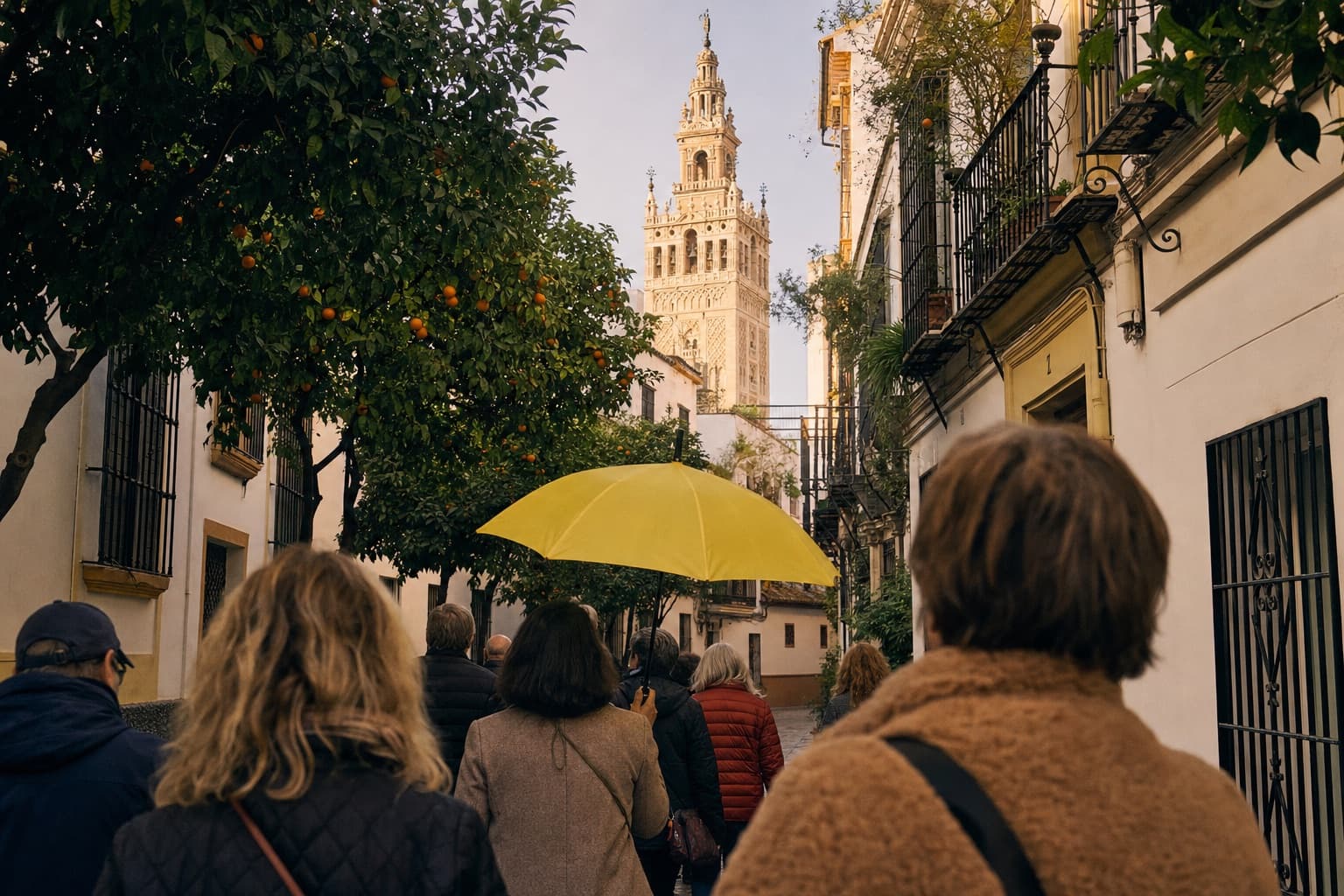
Our Triana free tour lasts 120 minutes, runs in Spanish and is the most local of the three we operate in Seville. As on the others, there is no entry price: at the end, the usual reference is 15 to 20 € per person for the guide.
Do it with a guide
Seville Monumental Free Tour
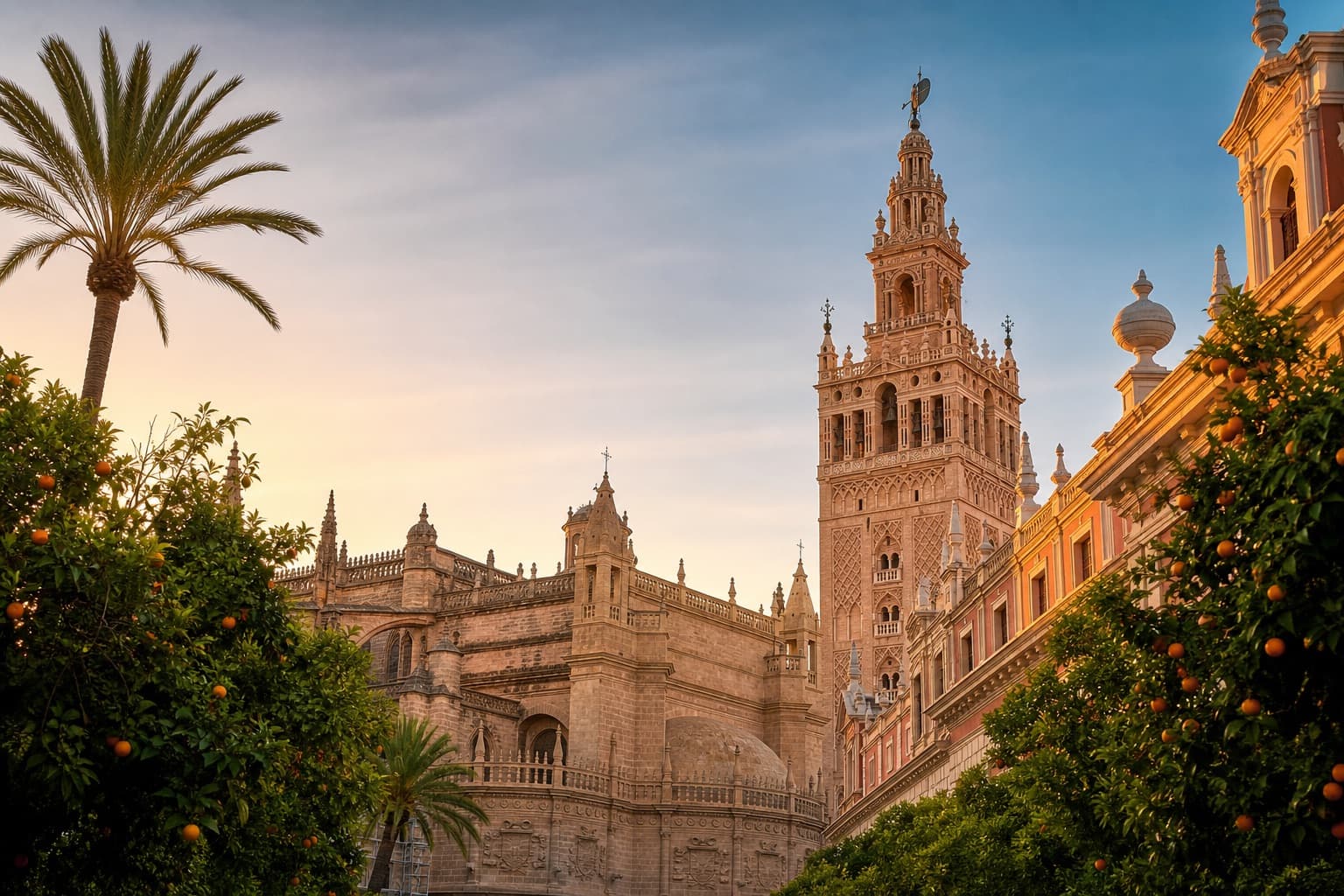
The Cathedral and the Giralda, the Royal Alcázar, the Archive of the Indies and the Torre del Oro: Golden Age Seville.
San Jorge castle and the Inquisition beneath the market
Beside the river, the Triana market stands on the remains of San Jorge castle. This part is documented: the Inquisition tribunal settled in the castle in 1481 and stayed until 1785, with interruptions, when it moved to another building in the city after years of river floods.
What you see today is an everyday market with its fish and fruit stalls, and an interpretation centre that recalls the castle and the repression of the Inquisition. Much of Triana's dark reputation comes from here, and so does the habit of telling stories of trials and convicts as soon as you step into the area.
The boat bridge and the Isabel II bridge
For centuries the only way to Triana was a bridge of boats joined by chains, dating from Almohad times, which lasted into the 19th century. It was fragile, got damaged in floods and set the rhythm of the quarter: whoever crossed entered another world.
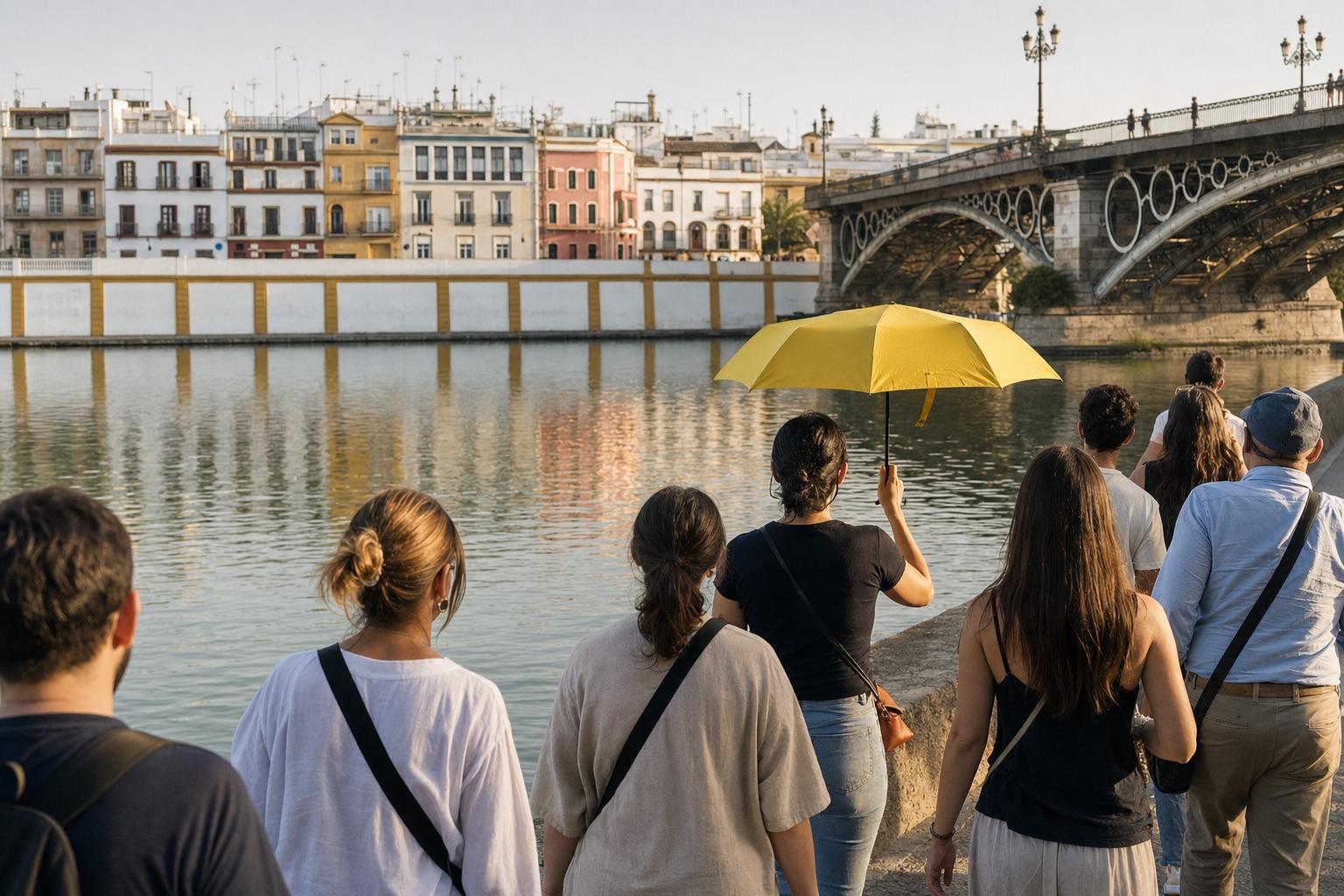
It was replaced by the Isabel II bridge, the one everybody calls the Triana bridge, opened in 1852 and designed by the French engineers Steinacher and Bernadet, modelled on the Carrousel bridge in Paris. With it, Triana stops depending on boats and floods, and crossing the river becomes an everyday matter.
Book free, leave a contribution at the end
The potters and Saints Justa and Rufina
Guadalquivir clay made Triana the quarter of ceramics: roof tiles, bricks, tableware and azulejos came out of its workshops. That heritage is still alive in the shops and the Ceramics Centre, and it explains the quarter's most beloved legend.
According to tradition, Justa and Rufina were two potter sisters who lived in Triana at the end of the 3rd century and refused to sell their pots for a pagan rite. They were martyred for it and today they are patron saints of Seville and of potters, shown holding the Giralda. Historians debate how much of their story is documented, so here we tell it for what it is, a legend with ancient roots.
Sailors and Rodrigo de Triana
With Seville's port open to the Indies, Triana filled with seafaring people. Its most famous figure comes from that world: Rodrigo de Triana, the sailor on La Pinta who, according to tradition, sighted land in the early hours of 12 October 1492.
The story has gaps. He is usually identified as Juan Rodríguez Bermejo and where he came from is disputed; that he lived in Triana is the popular version that gave him his name. Nor did he collect the promised reward, because Columbus claimed to have seen lights earlier. It is a good example of history and legend mixed, and we tell both sides.
Esperanza de Triana and the little Carmen chapel
On Calle Pureza stands the Sailors' Chapel, where the Esperanza de Triana is venerated, one of Seville's best-loved images. Its brotherhood is one of the oldest in the city and has its origin in the ceramists' guild, and every Good Friday dawn the whole quarter takes to the streets to see it pass.
At the foot of the bridge is the little Carmen chapel, designed by Aníbal González, the architect of the Plaza de España, and finished in 1928. Its brick-and-ceramic tower has earned it the nickname "the lighter". The Virgen del Carmen is patron of seafarers, and the chapel is still a place of everyday devotion, also for those crossing the bridge.
Flamenco, Calle Betis and what the tour is like
Triana is one of the cradles of flamenco: in its courtyards and forges people sang long before there were tablaos, and whole families of artists came from here. Calle Betis, which carries the Roman name of the Guadalquivir, is today the walk with the best view of the riverbank towards the Torre del Oro, especially at sunset.
The tour brings these stories together in 120 minutes, and afterwards you can keep strolling along the riverbank on your own. The exact meeting point and the times are not in this article: they come in the tour page and in your booking confirmation, so check them before you go.
Frequently asked questions
- How long is the Triana free tour?
- It lasts 120 minutes, that is, two hours on foot. The pace is relaxed, with stops to tell each story and time to ask the guide whatever you like.
- Is there a Triana free tour in English, Italian or French?
- No. The Triana free tour runs in Spanish only. If you prefer another language, check the pages of our other Seville tours for the options available.
- How much do you leave the guide at the end?
- There is no entry price, but at the end each person leaves a contribution for the guide. The usual reference is 15 to 20 € per person; if you enjoyed the experience, that is the figure to go by.
- Does the tour run during Holy Week and the Feria?
- On those dates the times and routes change. Check the tour page before booking to see how your chosen day looks, because the city is very busy and Triana goes all out for its processions.
- Where does the tour start?
- The meeting point and the times come in the tour page and in your booking confirmation. We do not give them here so you do not get a detail that may have changed.
- Are all the stories on the tour true?
- No, and we do not claim they are. The bridges, the castle and the Inquisition are documented facts; Justa and Rufina, and part of what is told about Rodrigo de Triana, are tradition or have disputed points, and the guide tells the difference at each stop.