In this article (8 sections)
Trip Tours is a walking-tour operator based in Madrid. In Lisbon we do not run our own guides: we work with trusted affiliated guides, and on our city page we gather the free tours. The usual benchmark for the contribution to the guide is 15 to 20 euros per person. What you do need is comfortable shoes and a taste for hills.
Before you start: hills, calçada and when to go
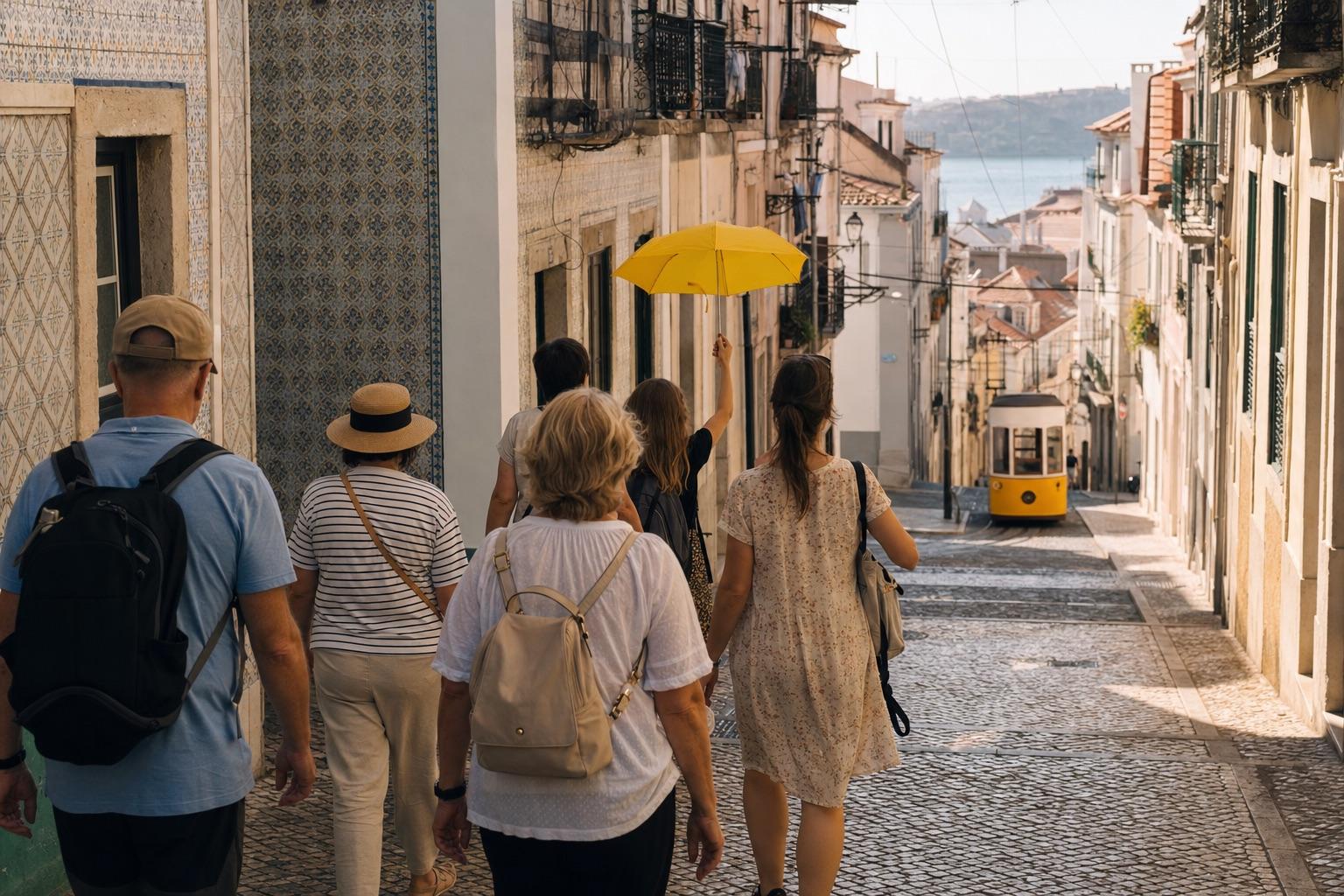
Lisbon is built on hills and you walk it uphill. The surface of many streets and squares is calçada portuguesa, the small polished cobble that turns slippery in the damp and from the wear of thousands of footsteps. Bring trainers with a grippy sole and leave smooth sandals for the beach.
Spring and autumn are the most comfortable seasons: mild temperatures and less heat on the climbs. In summer, keep the long walks for the morning and the end of the afternoon; in winter, carry something waterproof, because it rains on and off. Plan by neighbourhood rather than by monument: each day of this itinerary covers one area and avoids back-and-forth.

Do it with a guide
Unmissable Lisbon Free Tour
Dive into the heart of Lisbon with our Unmissabel Lisbon Free Tour, a whirlwind journey on which you will discover 3,000 years of history and...
Day 1 morning: Baixa, Rossio and Praça do Comércio
Start at the Rossio, the square with the wavy pavement that acts as a hinge between the Baixa, the Avenida da Liberdade and the climb to Alfama. From there, walk down Rua Augusta, the pedestrian street that crosses the Baixa from end to end, to the Arco da Rua Augusta and Praça do Comércio, the great square open to the Tagus.
The Baixa is a grid of straight streets, and that is no accident: the 1755 earthquake destroyed much of the centre and it was rebuilt on an orderly plan, what is now called the Baixa pombalina. A free tour of the centre fits very well here: in two hours it gives you the mental map of the city and the story of the earthquake told on the spot, exactly what you need on the first day.
Day 1 afternoon: Chiado, Bairro Alto and São Pedro de Alcântara
After lunch, climb up to the Chiado, the district of bookshops, cafés and theatres, and carry on to Largo Camões, where it joins the Bairro Alto. It is a demanding climb, so take it slowly. Several free tours in Spanish leave from this area, covering the centre and the Bairro Alto, and they link the history of the city with the bohemian Lisbon of the twentieth century.
Finish the afternoon at the São Pedro de Alcântara viewpoint, with views of the castle and the Baixa: it is the first big miradouro of the itinerary. If you have energy left, come back to the Bairro Alto at night, because it changes completely after dark, or book the night free tour, which covers streets and legends with the city lit up. It is a good way to end the day without having to decide where to go.
Book free, leave a contribution at the end

Day 2 morning: Alfama, the Sé and São Jorge Castle
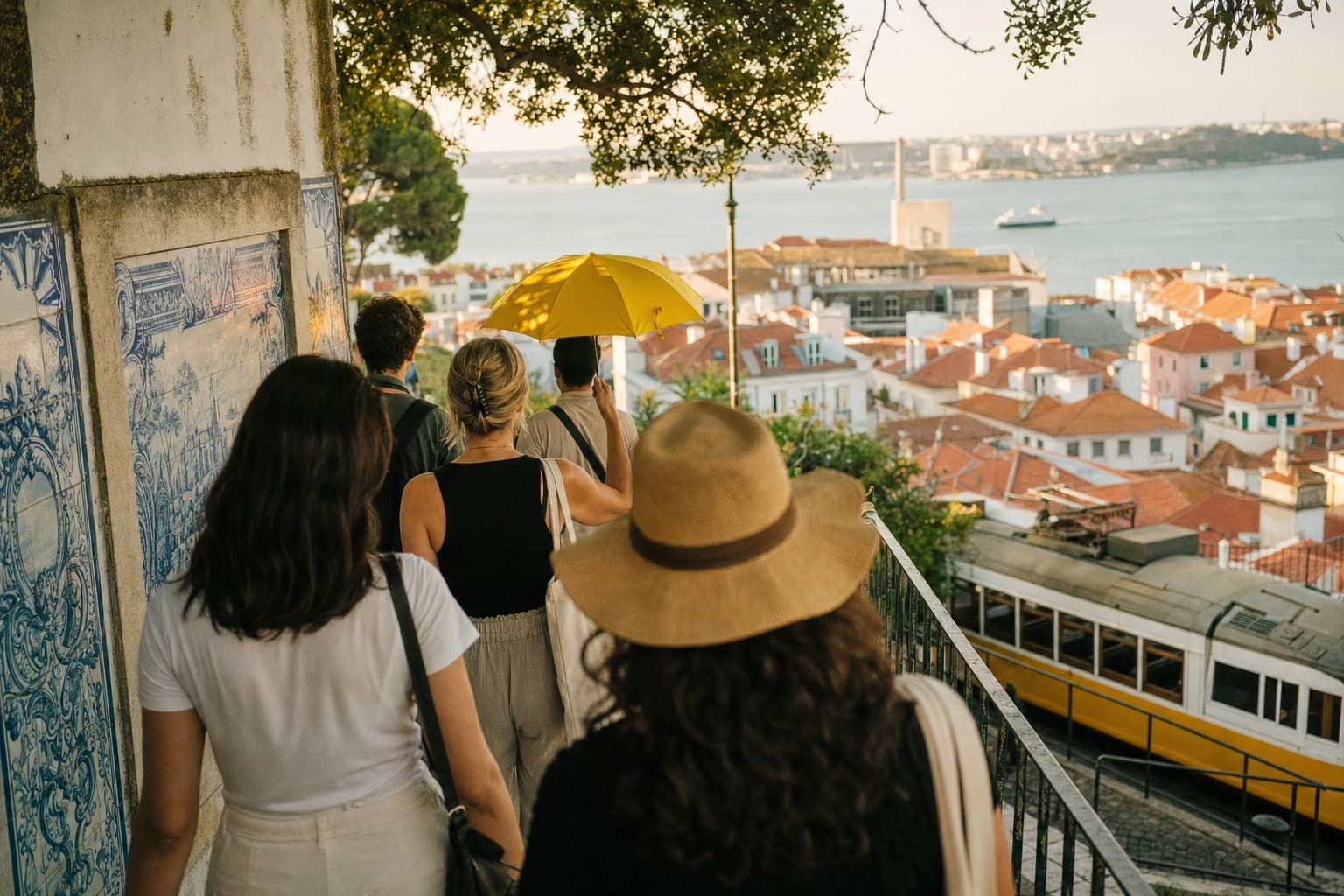
Alfama is Lisbon's oldest neighbourhood and the one that best withstood the 1755 earthquake, which is why it keeps its layout of alleys, stairways and courtyards. Start early at the Sé, the cathedral, and let the neighbourhood lead you uphill. Getting a little lost is part of the route, but a free tour of Alfama and Mouraria in Spanish saves you detours and tells you what lies behind each façade.
The climb ends at São Jorge Castle, the fortress that watches over the city and offers one of the best panoramas of Lisbon. The castle opens every day, but hours and tickets change with the season: check the official website before you go. The best plan is to arrive first thing, when there are fewer people and the sun is not yet fierce.
Day 2 afternoon: viewpoints, Mouraria and Graça
Walk down from the castle via the Santa Luzia and Portas do Sol viewpoints, two terraces above the rooftops of Alfama and the river, ideal for a pause with a view. From there you can cross to the Mouraria, the neighbouring and more working-class district of narrow streets and multicultural tradition. Alfama and the Mouraria are the two places where you can hear fado, which is music, not a neighbourhood: a melancholic song with Portuguese guitar. There are fado houses where you dine or have a drink while it is sung; the session is booked separately and is not part of any free tour.
If you have energy left, climb to Graça or to the Nossa Senhora do Monte viewpoint, one of the highest points of the old town and with a very good sunset. It is a long climb, so you can skip it and swap it for a quiet dinner in the Mouraria.
Day 3: Belém, from the Jerónimos to the pastries
Belém is about six kilometres west of the centre and brings together the Jerónimos Monastery, the Belém Tower and the Padrão dos Descobrimentos, the monument to the navigators by the river. The Jerónimos and the Belém Tower date from the sixteenth century, the age of the great discoveries, and both survived the 1755 earthquake. They close on Mondays, so give Belém a day that is not a Monday; the tower has had temporary closures for works, so check its official website. Both look good from outside without a ticket, and for the interiors check hours and tickets on the official websites.
Go early, before the coach excursions, and finish the visit with the custard tarts of the area: it is the stop almost everyone makes, queue included. Belém has its own free tour in Spanish, linking the monuments with their historical context. In the afternoon, head up to LX Factory, a former industrial complex turned into shops, galleries and restaurants, or return to the centre and end in Príncipe Real, a district of gardens and design shops next to the Bairro Alto.
Logistics: trams, lifts and Monday closures
Tram 28 is the most famous and is always full, especially mid-morning. Its route has changed in recent months, so check Carris before counting on it; on foot you get almost everywhere just as well and without a queue. For Belém use tram 15E, which leaves from Praça da Figueira and runs on to Algés via Belém, more comfortable than walking from the centre.
For the hills there are historic lifts. The Santa Justa one links the Baixa with the Chiado, and the Glória funicular climbs from Restauradores to the São Pedro de Alcântara viewpoint. There is also the Bica. They tend to have queues, so use them if the climb suits you, not as an attraction. And remember the closures: the Jerónimos and the Belém Tower do not open on Mondays, according to Turismo de Lisboa, and the castle opens every day except on some public holidays. Always check the official websites.
Frequently asked questions
- Are three days enough to see Lisbon on foot?
- Yes, if you organise by neighbourhood: the centre and Chiado on the first day, Alfama on the second and Belém on the third. You will get a full view of the old town without rushing, although with the hills it is best to take it slowly.
- On which day does each free tour fit?
- The centre and Bairro Alto one on the first day; the Alfama and Mouraria one on the second; the Belém one on the third. The night tour works well at the end of the first day, once you know the centre.
- How much do you leave on a free tour in Lisbon?
- The usual benchmark is 15 to 20 euros per person for a walk of two to two and a half hours, in cash or by whatever method the guide accepts. Booking costs nothing.
- What closes on Mondays in Lisbon?
- The Jerónimos Monastery and the Belém Tower close on Mondays, according to Turismo de Lisboa. That is why Belém is best given a day that is not a Monday. Always check hours on the official websites.
- Is fado a district of Lisbon?
- No, fado is a musical genre, a melancholic song with Portuguese guitar. You hear it in fado houses in Alfama and the Mouraria, and the session is booked separately, not part of the free tours.
- How do I get to Belém from the centre?
- The most comfortable way is tram 15E, which leaves from Praça da Figueira and reaches Belém. Check the service on Carris first, because routes can change.